Mobile Concrete Plant
Build On-Site, Save Transport Cost, Move with Your Project.
Capacity:
25 – 100m³/h
Type:
skip hopper or belt conveyor
Price:
$25,000 – $120,000+
Mobile concrete plant for sale
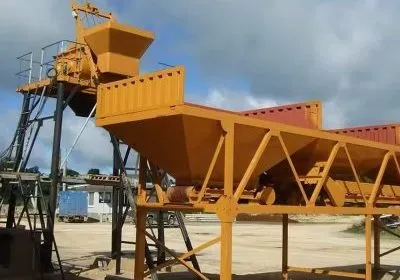
A mobile concrete plant is basically a small concrete factory built on a trailer chassis. You feed sand, gravel, cement, and water into one end, and fresh concrete comes out the other end. Because the whole machine sits on wheels, you can tow it to your job site, set it up in a few days, and start production right where you need it. When the project is done, you tow it to the next site and keep using it.
What you can get by using mobile concrete plant:
- Lower cost per m³ — produce concrete on-site and cut out long-distance delivery fees.
- Stable, fresh concrete every pour — every batch is mixed and poured within minutes, no early setting.
- Full supply control on remote sites — rural, island, and highway projects get their own steady supply.
This is what we deliver every day. With 20+ years of experience, 1,500+ projects across 100+ countries, we build mobile concrete plants that go where your project goes — so you pour on time, control cost, and stay in charge of your own supply.
mobile concrete plant price
The price range of a mobile concrete plant is $25,000 – $120,000 EXW China.
Price depending mainly on capacity, customized components and other additional requirements. Below is our standard price range — real factory prices, no inflated quotes.
| Models | Capacity | Price Range |
| YHZS25 ~ YHZS50 | 25 m³/h ~ 50 m³/h | $25,000 ~ $60,000 |
| YHZS60 ~ YHZS100 | 60 m³/h ~ 100 m³/h | $40,000 ~ $120,000 |
Note: Prices are for reference only. Final quote depends on configuration, optional add-ons, and destination port. Send us your project details to get a precise quote within 24 hours.
Why Mobile Concrete Plant Is the best Choice for On-Site Project?
A mobile concrete plant gives you control over cost, time, and quality on every project. Here are 4 real benefits you get from on-site production.
Zero Concrete Trans Cost
Ready-mix delivery costs $10–$20 per cubic meter on most overseas projects. With a mobile plant on your site, this cost drops to zero — and concrete waste drops by 10–15% because every batch is mixed only when needed.
Movable & Fast Setup
Pre-wired and factory-tested before shipping. Your crew unfolds the plant, levels it, connects power, and starts pouring concrete within 3–7 days. When the project section is done, the same plant tows to your next site.
Foundation-Free
No deep concrete foundation needed — a pre-compacted flat surface of about 300–500 m² is enough. This saves you weeks of curing time and tens of thousands of dollars in civil work.
High Concrete Quality
Wheels never come at the cost of quality. Our YHZS series uses the same self-made JS twin-shaft mixer as our stationary plants, producing stable C30 to C50+ concrete for highway, bridge, and government acceptance projects.
From cost savings to faster setup, more contractors are choosing on-site concrete production over long-distance ready-mix delivery. Mobile concrete plant is changing how concrete reaches your project.
About our mobile concrete plant
mobile concrete plant models
Choose by How You Use It
We group our mobile concrete batching plants into three practical series, so you can quickly find the one that fits your job site.
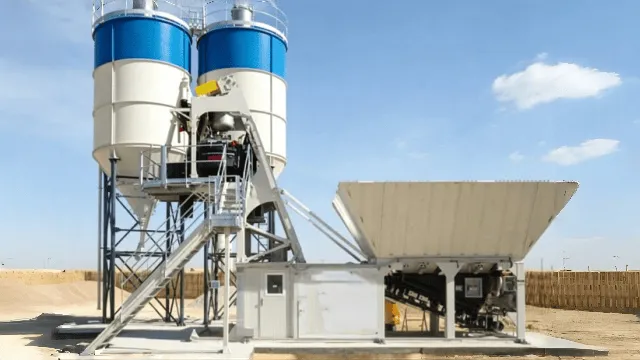
Mini Mobile Concrete Plant
YHZS525/35
25–35 m³/h
road repair | remote site | New investor
For small projects, rural areas, and budget-sensitive buyers
- Lower initial investment
- Easy transport (smaller container space)
- Simple installation
- Ideal for short-term or scattered projects
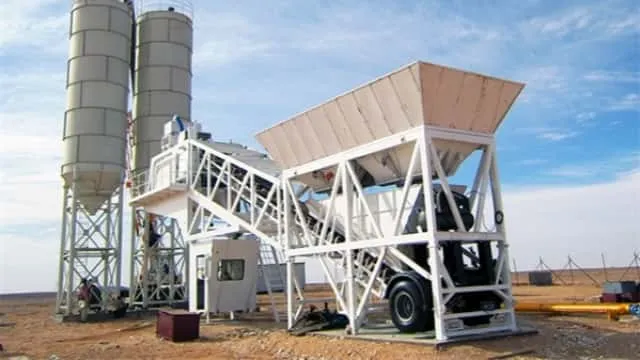
Standard Mobile Concrete Plant
YHZS50/60/75/90/100
50–100 m³/h
Highway | Infrastructure | Ready-mix supply
For contractors who need stable output and certified concrete quality
- Produces C30–C50 structural concrete
- Suitable for highways, bridges, industrial floors
- Meets government project standards
- Stable daily high-volume production
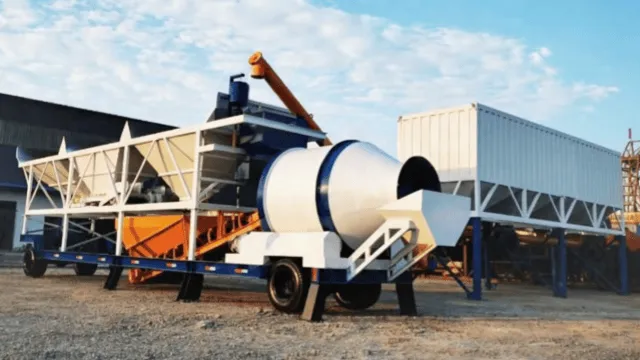
Drum Type Mobile Concrete Plant
Drum Mixer
60–100 m³/h
Agricultural infrastructure | Non-structural work
For projects with moderate concrete quality requirements
- Lower power consumption
- Simple mechanical structure
- Easy maintenance
- Suitable for C15–C30 concrete
Not Sure Which Model Fits You?
Answer 3 Quick Questions
Not sure which configuration fits your project? Answer 3 quick questions to jump to the real customer scenario closest to yours.
1
Is your project in a remote area?
e.g. Island projects, mountain regions, desert sites, rural construction far from cement terminals, off-grid infrastructure
No → next question
2
Will you move the plant every few months?
e.g. Highway paving, bridge construction, pipeline projects, railway track laying, sectional road repairs, wind farm construction
No → next question
3
Does your concrete need strict inspection?
e.g. National highways, expressway bridges, airport runways, port terminals, dam construction, military bases, government-funded infrastructure
↓ scroll to see all scenarios ↓
Real Project Scenarios. Real Mobile Plant Solutions.
We build Mobile Plant for Every Project Scenario
Not sure which model fits your project? Here are 4 common situations our customers face, and the mobile batching plant configurations that work best for each.
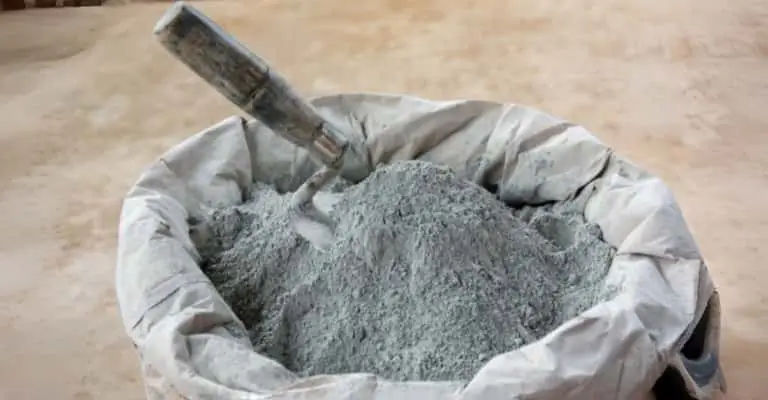
For Remote Sites
No Bulk Cement Access
Recommend
YHZS25/ 35
SITUATION
Project is in a remote area, an island, or a mountain region. Bulk cement trucks cannot reach the site, and only 1-ton bagged cement is available locally.
why
Big-Bag Breaker + Screw Conveyor — No bulk trucks reach here. Workers can dump 1-ton bags directly.
You will get
A complete cement supply solution that fits the whole plant into 1×40HQ + 1×40OT container. No crane, no silo foundation, no special site preparation.
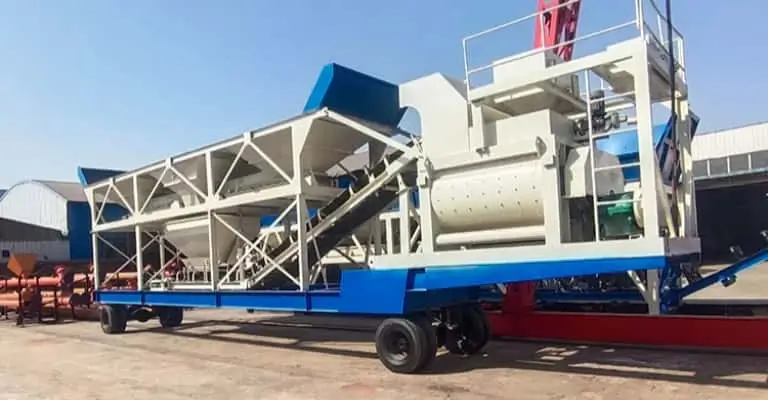
For Frequent Relocation
Between Project Sites
Recommend
YHZS50/ 60
SITUATION
Road or bridge contractor whose team moves every few months as the project section advances. Every relocation cost — civil work, crane rental, downtime — eats into your margin.
why
Foundation-free chassis + Horizontal mobile cement silo + Quick-connect aviation plugs. Team moves every few months. Whole plant tows behind a truck.
You will get
Full relocation and reinstallation in 3–7 days. No deep foundation digging, no crane needed for the silo. Your next project starts pouring almost as fast as your previous one shut down.
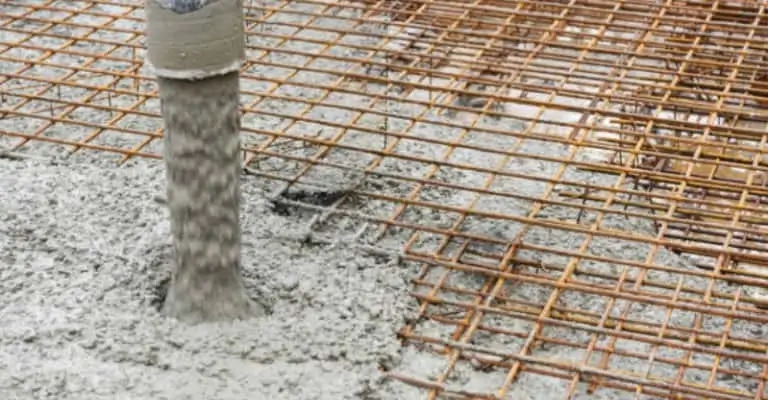
For Strict Quality Requirements
Recommend
YHZS75/ 90
SITUATION
Highway main lines, bridges, or airport aprons with strict government acceptance. You need stable C40+ concrete, batch after batch.
why
Self-made JS twin-shaft mixer + ±2% aggregate / ±1% cement & water weighing precision + Fully automated PLC control with mix recipe storage.
You will get
Every batch meets the same specification, with full data records ready for client and government inspection. Twin-shaft compulsory mixing handles hard, plastic, and high-strength concrete equally well.
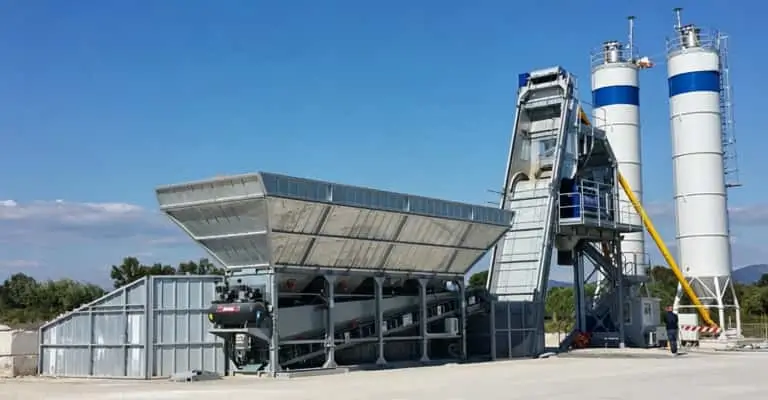
For Starting a RMC Business
Recommend
YHZS100
or our stationary HZS series for long-term commercial use
SITUATION
Ready-mix concrete business for multiple construction sites. Daily output, expansion potential, and reliable continuous production matter more than mobility.
why
Belt conveyor feeding + 100T or 200T bolted cement silo + Dual control room option + Modular design for future capacity upgrade.
You will get
A stable foundation for your RMC business. Start with a YHZS100 mobile plant if you may relocate later, or invest in a stationary plant for a permanent commercial hub.
Specification of mobile concrete plant
we design for you. quote for detailed info
Below are the full specifications of our YHZS series mobile concrete plants. If you are not sure which model fits your project, contact us for our experts’ recommendation.
| Type | YHZS25 | YHZS35/40 | YHZS50/60 | YHZS75/90 |
| Capacity (m³/h) | 25 | 35/40 | 50/60 | 75/90 |
| Concrete Mixer Type | JS500 | JS750 | JS1000 | JS1500 |
| Mixer Discharging Capacity (L) | 500 | 750 | 1000 | 1500 |
| Mixer Aggregate Size (mm) | 80/60 | 80/60 | 80/60 | 80/60 |
| Matched Aggregate Batcher | PLD800 | PLD1200 | PLD1600 | PLD2400 |
| Aggregate Weighing System | 1500kg±2% | 2000kg±2% | 3000kg±2% | 3000kg±2% |
| Water Weighing System | 200kg±1% | 300kg±1% | 600kg±1% | 900kg±1% |
| Cement Weighing System | 300kg±1% | 450kg±1% | 900kg±1% | 1500kg±1% |
| Additive Weighing System | 20kg±1% | 30kg±1% | 30kg±1% | 50kg±1% |
| Fly Ash Weighing System | Optional | Optional | Optional | Optional |
Note: Specifications above are for reference only. For exact configuration, voltage, and shipping plan based on your project location, please send us your project details — we usually reply within 12 hours.
Core Components of our mobile concrete plant
easy to move. longer to use.
A mobile plant survives long-distance towing, harsh job sites, and frequent relocation. Our concrete plants are able to run for 15+ years with proper maintenance — because of engineering choices we make and insist.
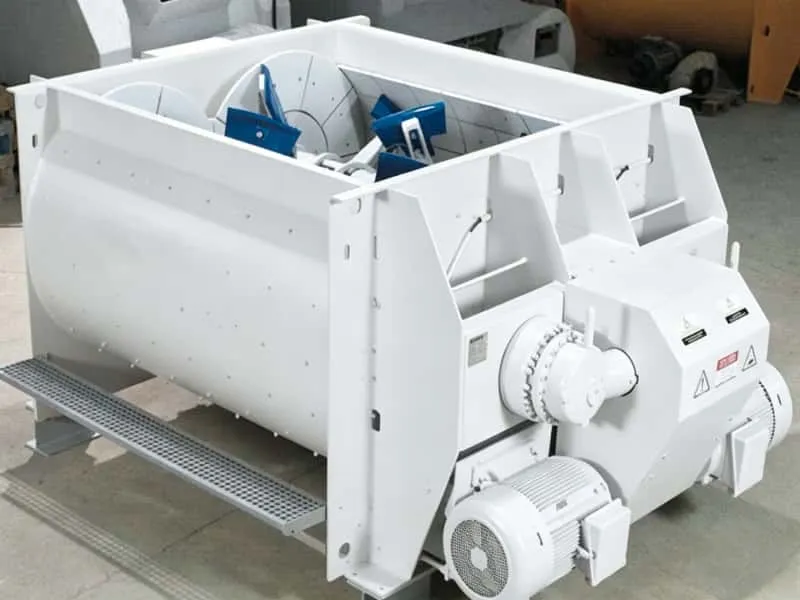
Twin-Shaft Mixer
The same heavy-duty JS-series twin-shaft mixer used in our stationary plants. High-chromium alloy liners and blades (HRC58+) deliver 12–18 months of service life even with hard aggregate. Compulsory mixing handles dry-hard, plastic, and flowing concrete with one unit.
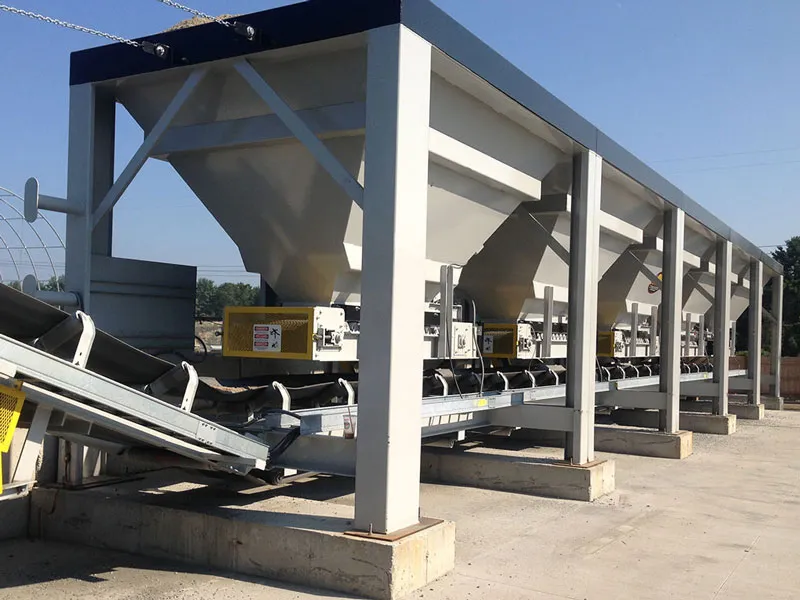
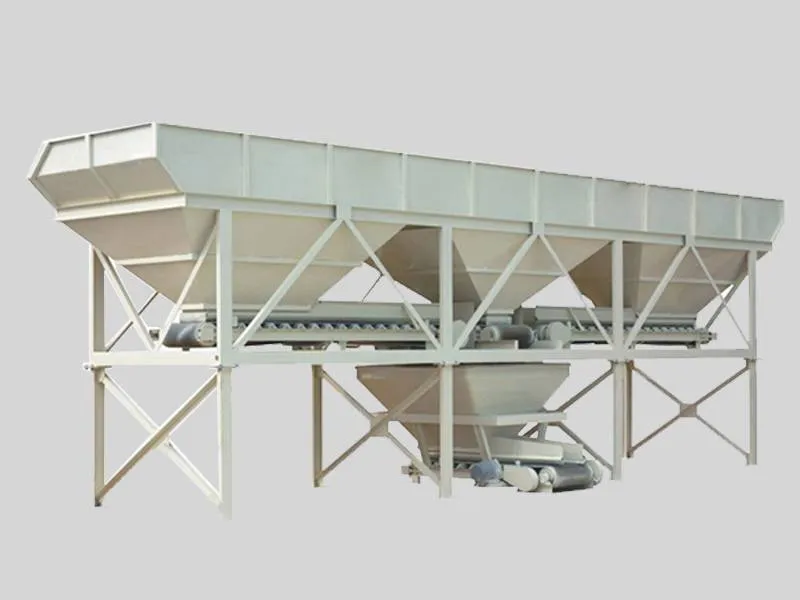
PLD batching system
Independent weighing hoppers for sand, stone, and gravel — each with its own load cell. Weighing accuracy ±2% on aggregates ensures every batch matches your mix design, from C25 base layers to C50+ structural pours.
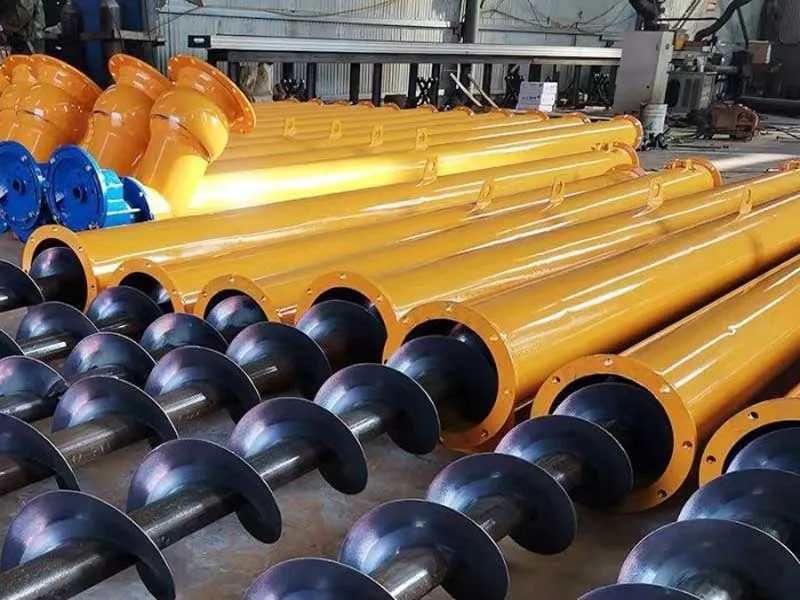
screw Conveyor
Sealed screw conveyors move cement and fly ash from silo to weighing hopper without dust loss. Wear-resistant spiral blades and reinforced bearings handle continuous 8-hour shifts in tropical and desert sites.
Weighing System
S-type load cells from international brands. Independent scales for cement, water, fly ash, and admixtures — each with ±1% accuracy. Automatic moisture compensation adjusts water dosage in real time based on aggregate humidity.
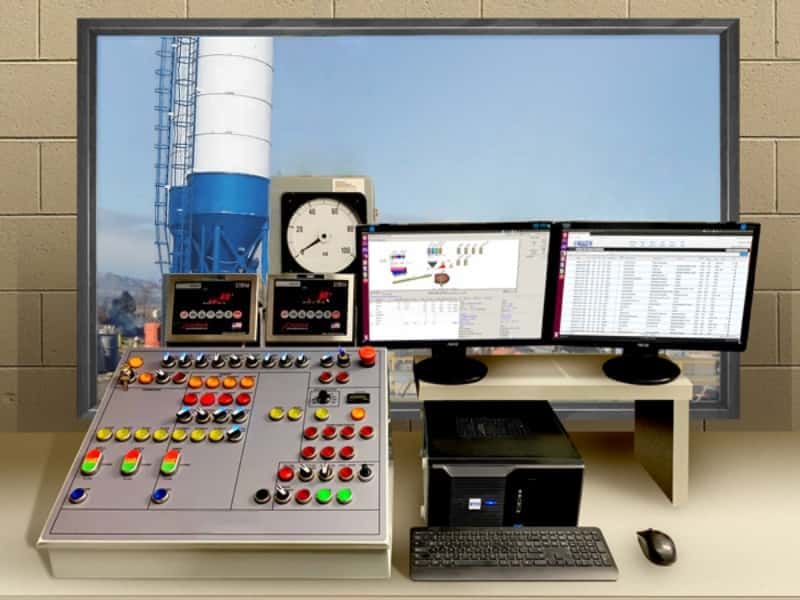
PLC Control System
Industrial-grade PLC with multi-language interface (English, Spanish, Russian, Arabic, French and etc.). One-key automatic batching, manual override, real-time data logging, and printable batch reports. Just 1–2 operators run the whole plant.
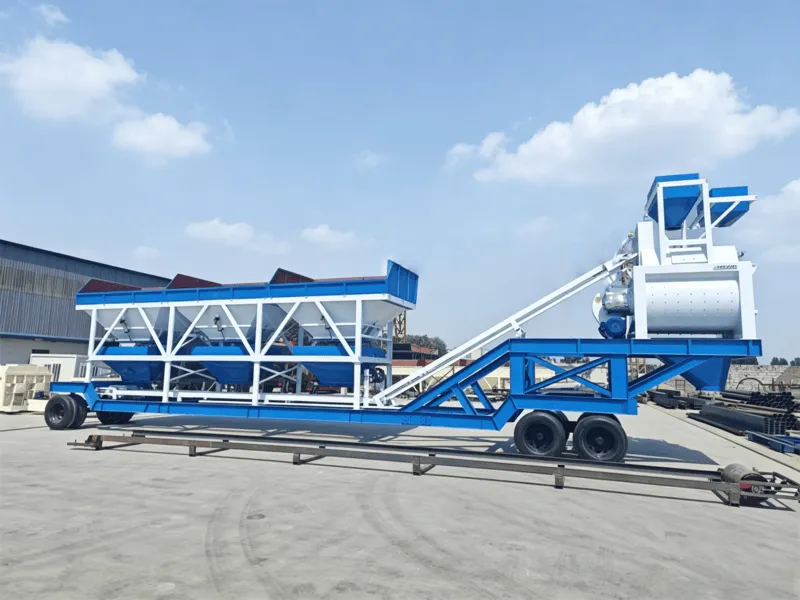
Wheeled Chassis
Heavy-duty Q345B steel chassis with reinforced kingpin and braked axles. Towable by a standard semi-trailer truck. Survives long-distance overland transport on rough roads in Africa, Central Asia, and Southeast Asia without structural deformation.
We
customize
every
mobile
concrete
plant
Aggregate Feeding
The single biggest customization choice is how aggregates get from the ground to the mixer. We offer two proven setups
Best for:
Higher-output plants (YHZS60–100), continuous pours, large project sites.
What you get:
- Continuous feeding — no stop-and-go, ideal for back-to-back truck loading
- Lower wear on moving parts vs. hopper lift systems
- Quieter operation — important for urban or noise-restricted sites
- Larger aggregate capacity — ideal for projects mixing 80+ m³ per hour
Best for:
Smaller plants (YHZS25–50), tight sites, frequent relocation projects.
What you get:
- Smaller footprint — saves 30–40% ground space vs. belt conveyor
- Faster setup & teardown — fewer parts to assemble during relocation
- Lower purchase cost — better value for small-to-mid projects
- Easier maintenance — fewer moving parts, simpler structure
Climate-Ready Add-ons
Your mobile concrete plant will run smoothly and produce stable concrete all year round, whether your site is in a +45°C desert or a -40°C freezing zone.
Concrete sets too fast in extreme heat, leading to poor strength. We equip your plant with a water chiller system and sunshades for the aggregate bins. This keeps the mixing temperature perfectly balanced, ensuring your concrete stays fresh and workable during transportation.
Freezing water and frozen sand will stop your production completely. We enclose the entire mixing tower and batching machine with insulated sandwich panels. Inside, we add a heating system for both the water and the aggregates. Your plant stays warm, allowing you to pour concrete even in the middle of winter.
Salt-laden air and 95% humidity will corrode standard steel and short-circuit normal electronics in months. For island or coastal projects, we use marine-grade anti-corrosion paint, stainless steel weighing load cells, and a fully sealed IP65 tropical-grade PLC control cabinet. Your plant will not rust, and the brain of your machine remains safe.
customized weighing range, aggregate bin layout … and mORE options
Every project has its own rhythm — different aggregate sizes, different output peaks, different site footprints. That’s why every core component above is customizable. We tune mixer capacity, weighing range, aggregate bin layout, and whatever you prefer to match your country, your concrete grade, and your site conditions. You tell us how you work — we build the plant around it.
Not Sure Which Setup Fits Your Project?
Send us your monthly concrete demand, site dimensions, and relocation frequency — our engineers will recommend the right feeding system and the matching plant configuration within 24 hours.
Total cost of a mobile concrete plant
The factory price ($25K–$120K) is just the starting point. To help you plan a realistic budget and avoid post-purchase surprises, here’s an honest breakdown of every cost involved in owning a mobile concrete plant — and how our engineering choices reduce each one.
What You’ll Actually Spend
Beyond the initial purchase price, evaluating the Total Cost of Ownership (TCO)—including shipping, setup, maintenance, energy, and labor—reveals the true cost of mobile concrete batching plant operations. Our highly automated, fuel-efficient designs are engineered to reduce these hidden operational expenses by up to 20% compared to cheaper alternatives in the mobile concrete batch plant market.
Local Installation & Commissioning
$3,000–$6,000 saved per installation — our engineers complete setup in 7–15 days. Mobile plants need on-site assembly, electrical hookup, and weighing calibration. Since our plants are pre-wired and factory-tested, on-site work is mostly mechanical assembly — no weeks of trial-and-error debugging like with cheaper self-installed plants.
Foundation & Site Preparation
Estimated cost: $2,000–$5,000. Mobile plants don’t need deep concrete foundations — just a pre-compacted 300–500 m² flat surface with drainage. $15,000–$50,000 saved vs stationary plants — only a flat compacted surface is needed. Stationary plants need $15K-$50K in foundations plus 2–4 weeks of curing time.
Energy & Operating Cost
A YHZS60, for example, consumes 80–110 kWh per day at full capacity. With local electricity at $0.08–$0.15/kWh, daily energy cost runs $8–$16. Our optimized motor-to-mixer drive ratios 15–20% lower power consumption per cubic meter with oversized generic motors.
Maintenance & Spare Parts
Wear parts need periodic replacement: industry average $2,500–$4,000/year for a YHZS60. 50% lower 5-year maintenance cost — factory-direct genuine parts at wholesale price. Because every core component is manufactured in-house, you buy parts from us directly — no middleman markup. Our HRC58+ liners last 12–18 months (vs industry 6–8 months).
Real YHZS60 Total Investment
To make these numbers concrete, here’s the actual total cost of a YHZS60 we shipped to an Indonesian highway contractor recently.
Total Investment Breakdown
YHZS60 Plant
$58,000
Inland Transport
$1,800
Site Preparation
$58,000
Installation
$4,500
Year-1 Parts Kit
$1,800
Total Investment
$69,100
The ROI: Investment Recovered in
~ 5 Weeks
By producing on-site instead of buying ready-mix concrete, this customer saved $28/m³
— covering the entire $69,100 investment in just 5 weeks of operation.
32,000
m³ Produced
Year-1 C30 concrete output for highway sub-base work
$28
Saved per m³
vs local ready-mix concrete pricing in Sumatra
$896K
Year-1 Total Saving
13× the initial investment — still running into Year 2
why we RECOMMEND to invest mobile concrete plant?
#1
you get money quick!
Buying a mobile plant is not just spending money — it’s exchanging a one-time cost for ongoing savings. The faster those savings cover the original investment, the better the decision. Below, we’ll show you how to estimate your own payback period, starting with the basic logic that applies to nearly every market.
Why On-Site mobile concrete plant Pays Back Fast?
The price of ready-mix concrete is high — but the cost of making concrete is low. When you buy ready-mix from a local supplier, you’re paying for 3 things on top of the actual concrete:
- The supplier’s factory rent and equipment cost
- Diesel and labor for delivery trucks
- The supplier’s profit margin (usually 30–40%)
Together, these three add $25–$45 to every m³ you buy. That extra money disappears from your pocket the moment the truck unloads. When you produce on-site with your own mobile plant, all three of those costs disappear. You only pay for raw materials, electricity, and 1–2 operators. The plant runs itself.
This is why the math works the same way in any country where ready-mix is a commercial business. The numbers shift slightly — but the principle stays the same.
The Simple ROI Formula
Now that you understand why, here’s the formula we use to estimate every customer’s ROI. It only uses 3 numbers:
(Local RMC Price − Your Production Cost) × Monthly Output = Monthly Saving
Total Investment ÷ Monthly Saving = Payback Period (in months)
global case
Indonesia Highway Project
Local RMC Price
$95/m³
Production Cost
$67/m³
Monthly Output
2,400 m³
Total Investment
$69,100
Estimated Monthly Saving:
$67,200
Payback Period: ~5 Weeks
#2
you earn money longer!
Our Mobile Plants Built to Last 15+ Years
— Sourced from actual data
A mobile plant survives long-distance towing, harsh job sites, and frequent relocation. The cheapest plants on the market last 3–5 years before structural fatigue sets in. Ours run for 15+ years with proper maintenance — because of 4 specific engineering choices we make in our 30,000 m² factory.
15–20% Thicker Steel Frame Than Industry Average
Our mobile plants survive 100+ relocations and 15+ years of use without structural deformation. Most plants on the market use Q235 ordinary steel (235 MPa) to cut costs. We use Q345B high-tensile steel (345 MPa) for every main structure — chassis, mixer support, and tower columns — with plates 15–20% thicker than standard, absorbing the vibrations of long-distance towing without micro-cracking.
Self-Made JS Twin-Shaft Mixer with HRC58+ Wear Liners
50% lower wear part replacement cost over 5 years, with direct factory access for every spare part. Many mobile plant suppliers buy mixers from third parties to lower their cost — but every external supplier means another point of failure. We design and build our JS-series twin-shaft mixers in-house, with high-chromium alloy liners hardened to HRC58+ (vs industry-standard HRC45). The liners survive 12–18 months of hard aggregate mixing before replacement — twice the lifespan of standard liners.
Smart PLC Cut Your Operator Cost in Half
We aim to cut your labor cost by 50% with one PLC operator instead of a 3-person crew. Our plants use Siemens or Schneider PLC with multi-language interface , one-click automatic batching, stored mix recipes, and remote diagnostic capability. Set your recipe once, press Start, and the system handles weighing, mixing, and discharging automatically. If anything goes wrong, our engineers log in remotely to diagnose within hours — no on-site engineer flight needed.
CE, BV, ISO & SGS Certified
Every CPFS mobile plant comes standard with CE, BV, ISO, and SGS. Each unit ships with full certification documentation, so your project can pass local regulatory checks and government tender. All of our concrete plants pass overseas customs without delays and qualify for government infrastructure bidding worldwide. Many low-cost manufacturers skip certifications to save money. requirements without delay.
#3
you stay ahead always!
Buying a mobile concrete batching plant today isn’t just solving today’s project — it’s positioning your business for the next decade. Here’s where the industry is heading, and why every trend works in your favor.
6.5%
CAGR THROUGH 2034
You Get Real-Time Control, Not Production Surprises
The global batching market is rapidly adopting AI and IoT-enabled controls. For you, this means real-time production data, remote diagnostics, and predictive maintenance — fewer breakdowns, less downtime, more pours.
30–50%
LOWER EMISSIONS
You Win More Bids by Going Green
Governments worldwide are tightening environmental rules, and contractors with low-emission, low-noise and water-recycling plants win more public tenders. On-site production cuts transport emissions vs. trucking ready-mix — going green isn’t a cost; it’s a competitive advantage.
-50%
LABOR DEPENDENCY
You Beat Rising Labor Costs with Smart Automation
Finding skilled operators is getting expensive worldwide. Our mobile plants use an advanced Siemens/Schneider PLC system with a multi-language interface. Just 1 or 2 basic operators can manage the whole automatic process. You stay ahead of labor shortages and keep daily running costs low.
4-8
SAVED PER m³
You Stay Ahead of Rising Cement Prices with Future-Ready Recipes
The next decade of concrete is moving toward fly ash, GGBS, slag, and recycled aggregates — driven by carbon rules and rising cement prices. Every CPFS mobile plant ships with an independent fly-ash silo interface, a dedicated ±1% admixture scale, and a wear-resistant mixer rated for abrasive recycled aggregate. You can replace up to 30% of cement with cheaper supplementary materials from day one — cutting raw-material cost 4-8 per m³ and meeting low-carbon tender requirements years before competitors retrofit their plants.
Core Features of Our Mobile concrete Plant
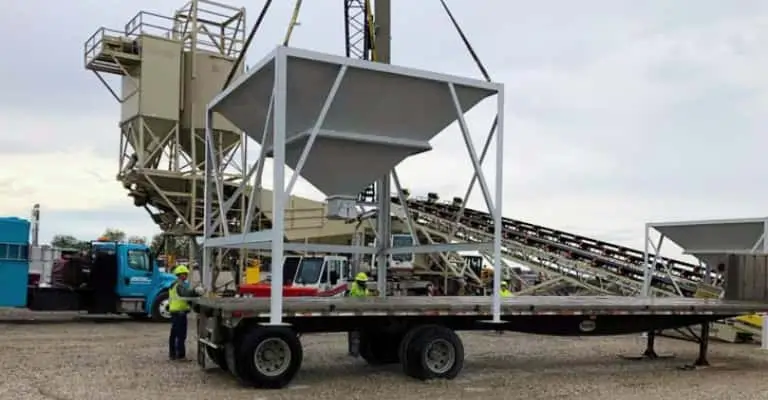
Foundation-Free Setup
Forget about spending weeks pouring expensive, deep concrete bases. The entire main structure sits on a reinforced steel skid frame. As long as your site has a flat, compacted ground surface, the plant can sit securely and operate smoothly. You save massive upfront civil engineering costs.
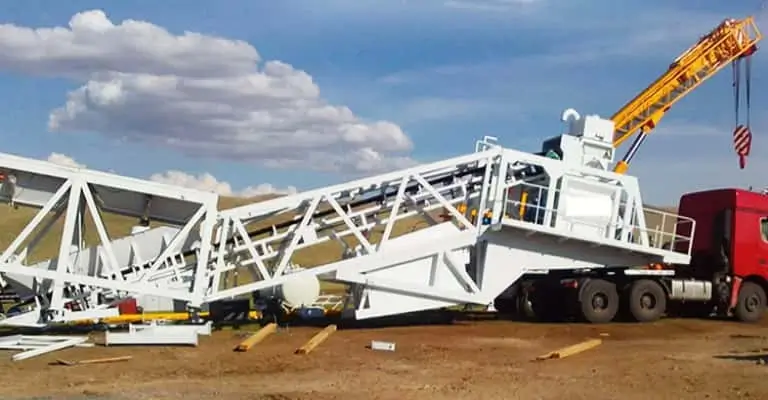
Wheeled Towing Chassis
Mobility is the biggest advantage. The main body comes with a heavy-duty axle and a standard kingpin. When your current project finishes, you simply hook it up to a standard tractor truck. You can easily tow your portable batch plant down the highway to your next contract location.
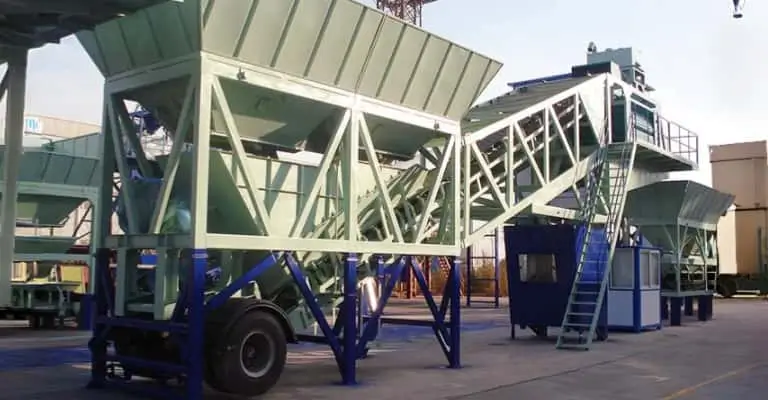
Plug-and-Play Assembly
We pre-wire the electrical cables and pre-connect the pneumatic air pipes inside our factory before shipping. Once the equipment arrives, you only need to unfold the modular parts and connect the main power source. This smart design cuts your installation time from several weeks to just a few days.
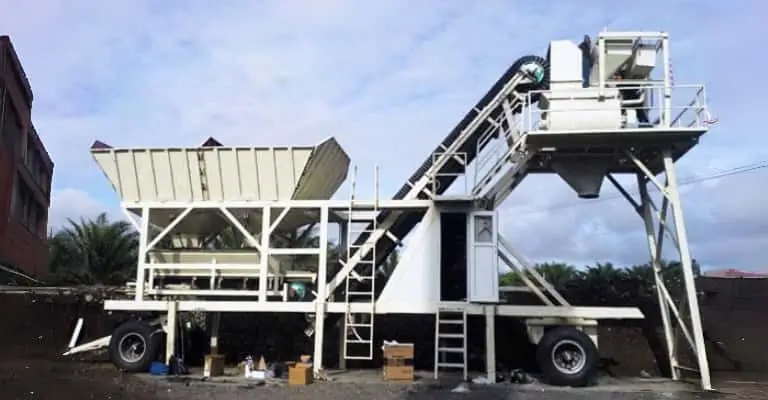
Compact Footprint Design
Space is often limited on active construction sites. We integrate the material weighing, conveying, mixing, and control systems into one highly condensed unit. It requires very little land area, making it the perfect choice for narrow road repairs, tight urban spaces, or remote mountainous areas.
Mobile vs. Stationary Concrete Plant
Which One Is Right for Your Project?
Mobile plant is the first pick for most of our customers — but not all. Before you commit, take 30 seconds to see where mobile makes the most sense, and where a stationary plant might still serve you better. The right type depends entirely on your project not on which one sounds newer.
| Type of Concrete Plant | Mobile Concrete Plant (YHZS series) | Stationary Concrete Plant (HZS series) |
| Capacity Range | 25–100 m³/h | 25–240 m³/h |
| Best Project Type | Project-driven operations: short-term, multi-site, remote | Commercial RMC & fixed operations: Long-term, single-site, commercial |
| Project Duration | 3–18 months per site | 2+ years on one location |
| Foundation Required | None — flat compacted ground only | Deep concrete foundation, 2–4 weeks curing |
| Setup Time | 3–7 days on-site | 30–60 days including foundation |
| Initial Investment | $25K – $120K | $18K – $300K |
| Relocation | Towable in days | Permanent (relocation requires full dismantling) |
| Maximum Output | Up to 100 m³/h | Up to 240 m³/h |
| Long-term ROI | High for moving projects | Higher for fixed commercial use |
Choose Mobile if: your project moves between sites, lasts under 18 months per location, or sits in a remote area. You’ll save $20K–$50K on foundation work and start pouring in 3–7 days.
Choose Stationary if: you’re running a ready-mix business, on a 2+ year mega-project, or need above 120 m³/h continuously. You’ll get 8–12% lower cost-per-cubic-meter at high volumes. Learn more about stationary type →
Our mobile Concrete Plant Projects worldwide
Since 2005, we’ve delivered mobile concrete batching plants to 100+ countries across Asia, Africa, Europe, Oceania. Below are 4 recent projects — each one a different country, a different challenge, and a different configuration.
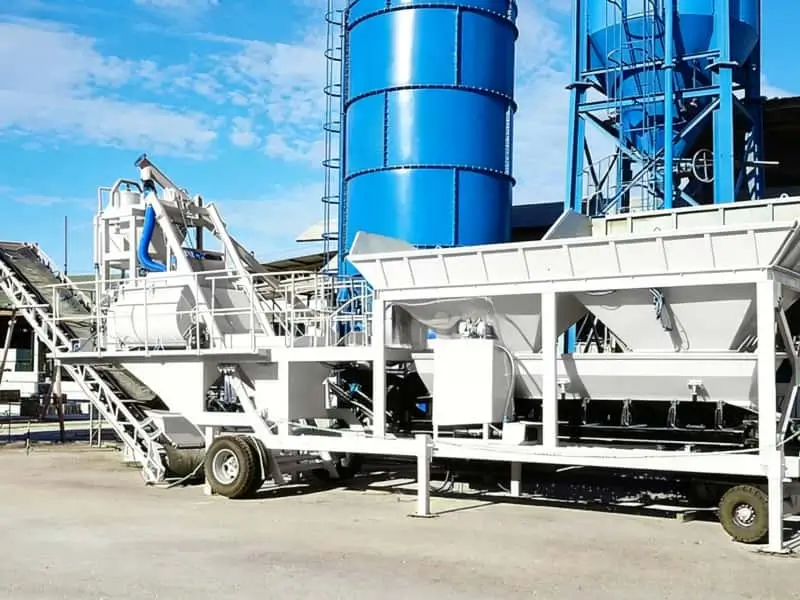
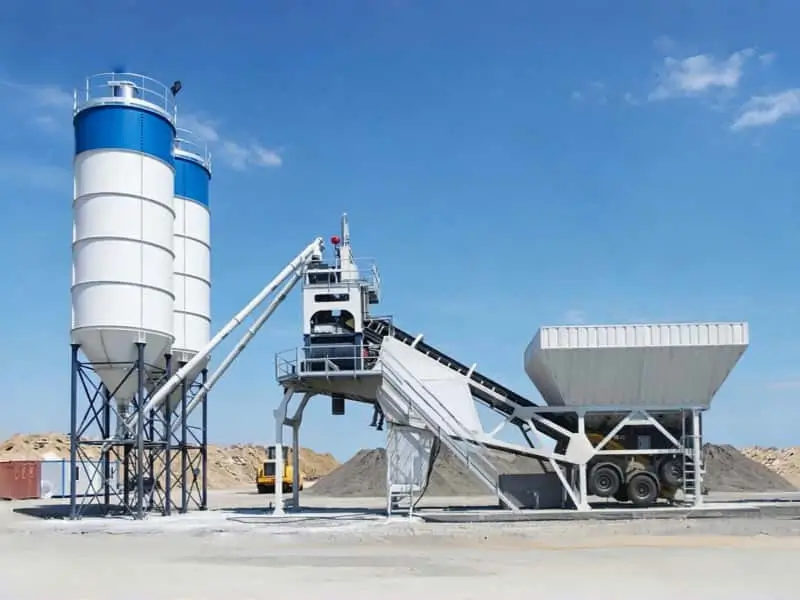
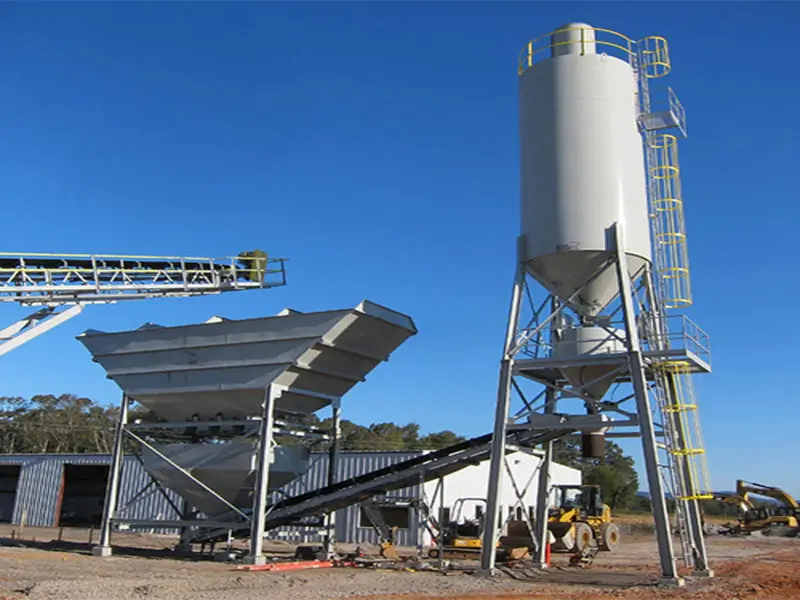
YHZS60 Mobile Concrete Batching Plant in Indonesia
Ready to build your own high-performance mobile concrete plant?
Join hundreds of satisfied project managers worldwide and maximize your ROI today.
Our mobile Concrete plants for Every Industry
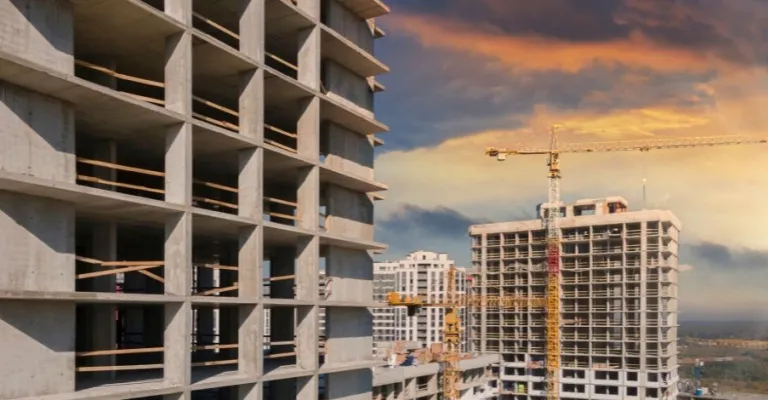
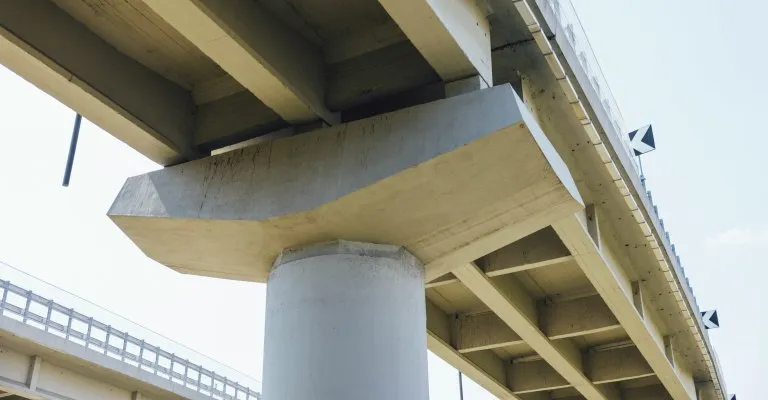
Explore how our field-proven plants deliver stable, uninterrupted concrete production for every specific construction sector.


Selection Guide: Choose the Right Mobile Plant for Your Project
Choosing the correct mobile concrete plant depends on your project’s space, relocation frequency, and concrete quality requirements. Different industries face different challenges. A highway contractor cares about how fast the plant can move, while a city builder cares about how much space the plant takes up. By understanding the technical design behind different mobile plants, you can select the exact plant that saves costs and fits your job site perfectly.
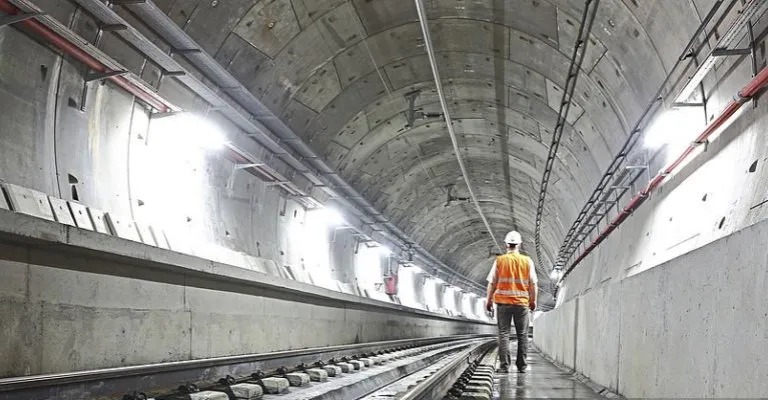
1. Road, Highway, and Railway Construction
- What You Need: A high-capacity mobile plant that is easy to tow and uses a belt-feeding system for continuous production.
- Why: Highway and railway projects usually advance section by section. This means the equipment must move every few months to follow the construction progress. A standard mobile plant is built on a heavy-duty wheeled chassis, allowing a truck to tow it to the next site easily without dismantling the whole structure.
Furthermore, these projects require strict structural concrete grades (like C40 or C50) to pass government inspections. Therefore, the plant must use a compulsory twin-shaft mixer to ensure uniform and strong mixing. Because road paving requires high-volume, non-stop pouring, a belt-feeding system is highly recommended. Unlike a hopper that goes up and down, a belt conveyor provides a steady, continuous flow of sand and stones into the mixer, increasing the hourly output. - Recommendation: Our YHZS60 to YHZS100 mobile plants with continuous belt-feeding systems are the ideal choices.
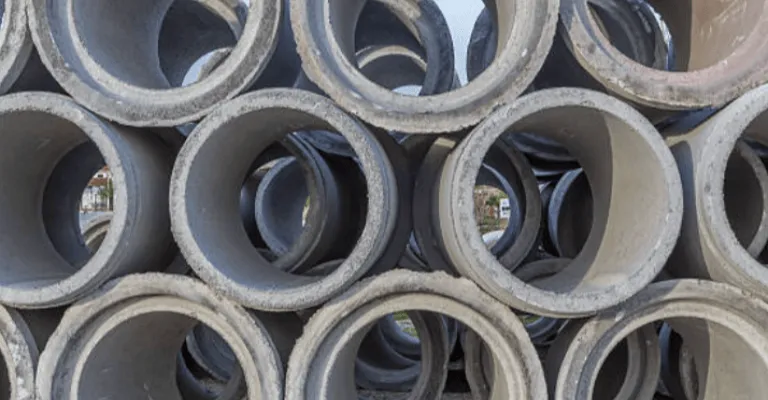
2. Commercial Buildings and Urban Projects
- What You Need: For city construction, the most important factors are a small footprint and strict environmental dust control.
- Why: Urban job sites always have limited space. You cannot build a large foundation or use a long belt conveyor. In this situation, a hopper-lift mobile plant is the best technical solution. The skip hopper pulls the sand and gravel directly up a steep track into the mixer. This vertical lifting design saves about 30% to 40% of ground space compared to a belt conveyor. Additionally, city projects have strict rules about dust and noise. To meet these standards, the mobile plant needs to be equipped with fully enclosed cement silos, pulse dust filters on the roof, and sealed mixing systems. This ensures that the surrounding city environment is not polluted during daily operations.
- Recommendation: Our YHZS50 or YHZS75 compact hopper-lift mobile plants are the best fit.
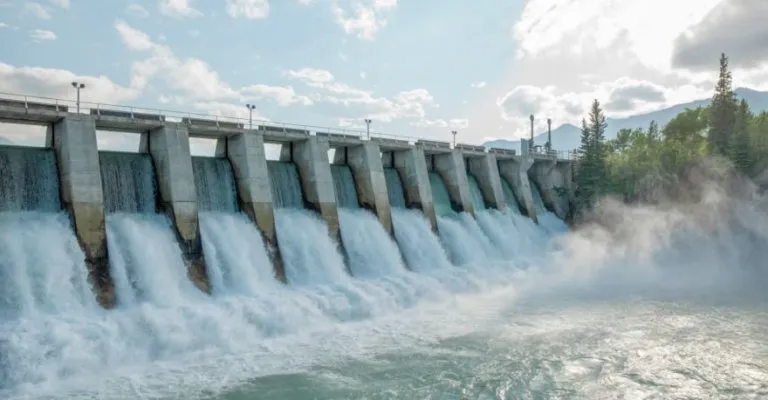
3. Hydropower Stations and Dam Projects
- What You Need: Dam construction requires heavy-duty mobile plants that can run 24/7 without stopping, often handling hard, dry concrete in remote areas.
- Why: Hydropower projects are usually located in mountains or valleys far from the city grid. They require “mass concrete” pouring. This means the concrete must be poured continuously over many days to avoid structural cracks. Therefore, the mobile plant must have a highly reliable PLC control system and backup power options. Because bulk cement trucks might not easily reach these remote mountain sites, the plant often needs customized storage solutions, such as big-bag cement breakers. Moreover, dam projects often use RCC (Roller Compacted Concrete), which is very dry and hard. The mixer must have thicker, high-chromium alloy wear liners and stronger motors to mix this tough material without breaking down.
- Recommendation: For dam and hydropower projects, we recommend the heavy-duty YHZS75 or YHZS100 models equipped with JS1500 mixers and big-bag cement breakers.
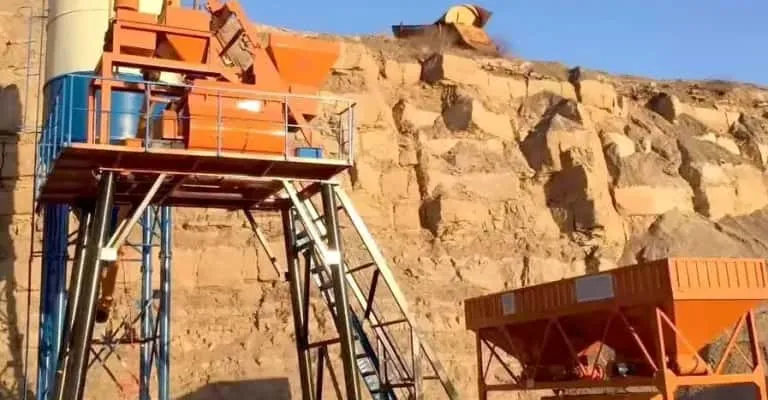
4. Rural Infrastructure and Small Scattered Projects
- Conclusion: For small village roads or farm projects, a mini mobile plant with simple mechanical operation and low investment is the smartest choice.
- Explanation: Rural projects usually have a limited budget and do not need high-grade structural concrete (often just C15 to C25 grade). The roads leading to the site might be narrow, making it hard for large trailers to enter. A mini mobile plant is highly compact and can be towed by a small truck or tractor. It does not need any complex foundation—just flat, hard ground. Since bulk cement silos are expensive and bulk cement is hard to deliver to villages, these mini plants often use a simplified aggregate batcher and a bag-breaking hopper. Workers can drop 50kg cement bags directly into the screw conveyor. This design cuts out unnecessary costs and keeps the machine easy to maintain for local workers.
- Recommendation: YHZS25 or YHZS35 mini mobile plant provides the most economical and practical solution.
Your project deserves a custom-fit design.
We listen to your needs and apply our professional expertise to build the most efficient plant for you.
Mobile Concrete Plant Types: Which One Fits Your Project?
The mobile concrete batch plant market is growing fast for one simple reason: contractors are tired of paying high ready-mix prices and want to take control of their own concrete supply. Today, the market gives you a tool for every job—from ultra-compact mini plants for rural repairs to heavy-duty RCC setups for dams. To help you make a smart choice, here is a quick breakdown of the different mobile batching plant types and the exact problems they solve:
For Commercial Concrete Sales
The mobile ready mix concrete plant is engineered for investors selling concrete to third-party contractors. Commercial clients demand strict mix traceability and high volumes. Therefore, these plants feature independent weighing hoppers (±1% accuracy for cement/water) and advanced PLC systems that store hundreds of mix recipes and print batch reports. They typically use continuous belt-feeding to maintain high hourly outputs (60-100m³/h), ensuring your transit mixer trucks are loaded rapidly without delay.
For Component Manufacturing
Producing hollow blocks, wall panels, or cement pipes requires a specialized mobile precast concrete plant. Precast concrete requires an ultra-uniform, zero-defect mix with very low water content. In these plants, the standard twin-shaft mixer is often replaced by a planetary mixer. The planetary mixing stars rotate on their own axes while revolving around the center pan, creating a complex mixing path with zero dead angles, ensuring perfect consistency for molds.
For Dams & Heavy Pavements
An RCC mobile mixing plant is specifically designed for Roller Compacted Concrete. RCC is a zero-slump, high-density concrete that is so dry and stiff it will stall or burn out a standard mixer motor. RCC plants are heavily optimized with stronger dual motors, thicker high-chromium alloy liners (HRC58+), and specific blade angles to provide strong, continuous mixing. They ensure highly stable proportioning and uniform discharge to work continuously with heavy paving equipment without interruption.
For Tight Spaces & Limited Budgets
A mini mobile concrete batching plant (or small mobile concrete batching plant) is the ultimate solution for rural infrastructure or scattered repairs. Instead of a long belt conveyor, these units use a vertical hopper-lift system, cutting the required ground footprint by up to 40%. They are built on a highly compact chassis towable by a light truck. To bypass the need for expensive bulk cement silos and deep foundations, they are often equipped with simple bag-breaking hoppers, allowing local workers to feed 50kg cement bags directly into the system.
For Different Transport Distances (Wet vs. Dry)
You need to decide between a mobile wet concrete batching plant and a dry mobile concrete batching plant based on your delivery radius. A “wet” plant contains a central compulsory mixer (usually twin-shaft), blending all materials on-site before discharging them. This guarantees perfect homogeneity and C40+ structural strength. A “dry” plant has no central mixer; it only accurately weighs the raw materials and drops them directly into a transit mixer truck. The actual mixing happens inside the truck’s drum while driving. Dry plants have lower initial costs and are ideal for extremely long-distance deliveries where wet concrete might set too early before reaching the site.
The mixer: which Mixer Do You Need?
The mixer is the absolute heart of your mobile concrete batching plant. Different projects require different concrete fluidity and shearing power. To guarantee high-quality batching, you must equip your plant with the exact mixer your concrete recipe demands.
Twin-Shaft Mixer
The Standard for Structural Concrete (JS Series)
How it works:
Two horizontal steel shafts covered with heavy-duty paddles rotate in opposite directions, creating a violent, compulsory shearing action.
What makes it different:
It breaks up cement clumps in seconds and coats every single piece of aggregate evenly. It is extremely fast and powerful.
Why It’s the Standard Match:
This is why we equip almost every standard mobile wet concrete batching plant and mobile ready mix concrete plant with a twin-shaft mixer by default. It is the most reliable way to guarantee your concrete passes strict government engineering codes (C30 to C60+) without fail.
Planetary Mixer
The Master of High-Precision Homogeneity
How it works:
The mixing blades act like planets in the solar system. They revolve around the center of the mixing pan while simultaneously spinning on their own axes.
What makes it different:
This complex movement leaves absolutely zero “dead zones” inside the pan, providing 100% homogeneity.
Why It’s the Standard Match:
This is the default heart of a mobile precast concrete plant. We pair them together because it is the only mixer capable of handling very fine materials, dry-hard concrete, or color pigments to ensure zero surface defects for hollow blocks and paving stones.
Drum Mixer
The Cost-Effective Gravity Mixer
How it works:
It uses a rotating cylindrical drum with fixed steel fins inside. Materials are lifted to the top and fall back down by their own weight.
What makes it different:
With a very simple mechanical structure and fewer moving parts, it consumes much less electricity and is highly resistant to wear.
Why It’s the Standard Match:
We use this as the standard setup for a small mobile concrete batch plant or a mini mobile batching plant. It keeps the upfront cost as low as possible for new investors handling rural infrastructure or temporary road repairs (C15-C25 concrete).
The Mobility: How Does mobile concrete plant Move?
In the concrete industry, “mobility” takes several different physical forms depending on project demands. Understanding these chassis structures helps explain how contractors minimize transport costs and adapt to various site conditions.
By Towable Trailer Chassis
For Frequent Relocation
The Setup:
The plant is built onto a heavy-duty steel frame equipped with built-in axles, tires, and a standard tractor kingpin.
The Value:
It acts just like a regular semi-trailer. Contractors simply hook it up to a truck, tow it down the highway, lower the support legs, and start working. This is the industry standard for a portable concrete batch plant used in highway construction where the site advances every few months.
By Skid-Mounted Design
For Semi-Permanent Sites
The Setup:
Instead of wheels, the plant sits on a strong, flat steel base (a skid). Moving it requires a crane to load the module onto a flatbed truck.
The Value:
It saves money by eliminating axles and tires that are rarely used, while still keeping the massive “foundation-free” advantage (requiring only flat, compacted ground). It is highly practical for medium-term projects (1 to 2 years) where deep concrete foundations are too expensive or prohibited.
For Containerized Design
For Ocean Freight & Harsh Weather
The Setup:
The plant modules are strictly engineered to match the exact dimensions of standard 40HQ or 40OT shipping containers.
The Value:
For overseas projects, this completely eliminates massive “oversized cargo” penalties during international sea freight. Once on-site, the container-like enclosure protects the core mixing and electrical components from extreme desert heat, island salt-spray, and vandalism.
For Truck-Mounted Batching Plant
For Ultimate Daily Agility
The Setup:
The entire batching and mixing system is permanently integrated onto a heavy commercial truck chassis.
The Value:
A truck mounted concrete batching plant offers the highest level of mobility. Operators can drive to multiple different small sites in a single day, mix on-site, and leave immediately. It is widely used for scattered municipal repairs or remote well-pad constructions.
How to Evaluate Your Concrete Demand & Profit Margin?
Before investing a single dollar, it is important to know exactly how much concrete you need and how much money you will keep in your pocket. Here is a simple, step-by-step way to evaluate your concrete business:
① Figure Out Your Daily Demand
Look at your upcoming projects or talk to local contractors. Do they build rural houses or lay highway pavement? Estimate the total volume. As a golden rule: if your site needs more than 25 to 30m³ per day, buying your own mobile plant is already cheaper than buying from a third party.
② Calculate Your True Production Cost
Do not rely on internet averages. Call your local quarries and cement suppliers. Add up the exact cost of sand, gravel, cement, water, and electricity required to produce one cubic meter (1m³) of concrete.
③ Check the Local Ready-Mix Price
Call a local commercial concrete supplier and ask what they charge to deliver 1m³ of concrete to your site. Because they add delivery fees and their own markup, this price is usually high—often around 100 – 120.
④ Do the Profit Math
For example, your total raw material cost might be $65 per m³. Subtract your production cost from the local ready-mix price (e.g., 110 − 65 = 45). The 45 is your profit margin per cubic meter. Multiply that by your daily demand (e.g., 50m³ x 45 = 2,250). That is exactly how much you save or earn every single day by producing on-site.
How to prepare Site for mobile concrete plant?
Preparing the site for a mobile plant is fast and highly cost-effective because it avoids deep foundations. However, strategically planning traffic flow and material storage is highly recommended to maximize daily output. Unlike stationary plants that take weeks of civil work, setting up an on-site mobile concrete batching plant is incredibly simple. To keep operations smooth and safe, successful site layouts generally follow these key principles:
Compact, Flat Surface
The mobile concrete plant has foundation-free advantage, so no need for deep pits or foundations. Mobile plants typically only require a flat, pre-compacted surface of about 300–500 m². This feature alone saves significant civil engineering costs and weeks of curing time.
One-Way Traffic Flow
Large transit mixer trucks and wheel loaders require ample room to maneuver. Designing a “drive-through” or one-way traffic loop is a best practice. When trucks do not have to reverse to load concrete, major bottlenecks are eliminated, and safety hazards are significantly reduced.
Strategic Material Storage
Positioning sand and gravel stockpiles as close to the aggregate batcher as possible minimizes the distance the wheel loader travels, which saves fuel and cycle time. Additionally, building sturdy partition walls between different aggregate piles prevents materials from mixing and protects the integrity of the concrete recipe.
Drainage and Utilities
A flooded yard can quickly deteriorate under the weight of heavy trucks. Ensuring the site has a slight slope (1-2%) helps rainwater drain away from the equipment. Securing a reliable industrial power supply and sufficient water storage for both mixing and daily equipment cleaning is also a critical early step.
Total Cost Breakdown & Budget Allocation for Mobile Concrete Plant
When budgeting, daily volume is your best metric. If your project consistently requires more than 25 – 30 m³ per day, the savings generated by on-site production will typically cover your entire mobile concrete plant cost within the first year. Once you cross this threshold, owning the equipment becomes a highly profitable asset rather than an expense. To help you allocate your funds accurately, here is a transparent breakdown of the main factors that make up your initial setup budget (generally ranging from $25,000 – $120,000 for the plant itself):
Production Capacity (60-70% of Plant Cost)
The baseline mobile batching plant price is strictly dictated by your output requirements. A mini 25m³/h plant is highly budget-friendly, starting around 25,000.Conversely, a high−capacity 100m³/h unit demands larger aggregate bins and a heavier chassis, pushing the core price loser to $100,000–$120,000.
Mixer Type & Automation (10-15% of Plant Cost)
Upgrading to a specialized planetary mixer, or investing in a fully mobile automatic concrete batching plant with a top-tier PLC system, usually adds 3,000 to 8,000 to the initial cost of mobile concrete batching plant. This premium pays for itself quickly by reducing labor expenses and material waste.
Freight, Logistics & Climate Prep (10-20% of Setup Cost)
Ocean freight rates and local import duties mean the final mobile concrete batching plant price in india will differ from the exact same setup shipped to Tanzania. Choosing a containerized design can slash shipping fees. Additionally, if your site requires water chillers or insulated panels, allocate an extra 2,000 – 5,000 for these environmental adaptations.
The Auxiliary Fleet (The Hidden Cost)
You cannot run a concrete business without moving the materials. Buying transit mixer trucks and a wheel loader to feed the plant can cost as much as the batching plant itself. Always allocate a significant portion of your budget for this delivery and feeding fleet.
Pro Budgeting Tip
If you are unsure where to start, we highly recommend the YHZS60 mobile concrete plant. At 60m³/h, it is our global best-seller for first-time investors. It strikes the perfect balance: compact enough to tow easily without expensive oversized permits, yet powerful enough to supply medium highways or commercial ready-mix operations. It delivers the fastest ROI without overstretching your initial budget.
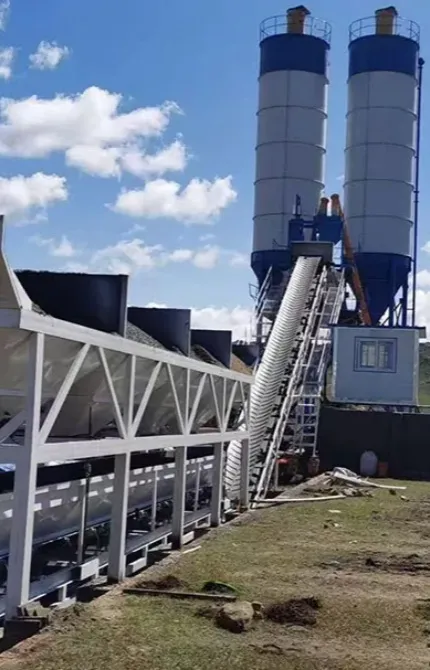
Maximizing Uptime: Installation, Training & Operations
The physical machine is only half the equation; how quickly you set it up and how well your team runs it determines your long-term profitability. Unlike stationary plants that require weeks of complex wiring and welding, a mobile plant is designed for rapid deployment.
Rapid Modular Assembly: The core components arrive pre-wired and pre-tested from the factory. By utilizing quick-connect aviation plugs and unfolding the modular frames, a professional team can assemble, connect, and power up the entire plant in just 3 to 7 days.
Load Cell Calibration: Before mixing your first commercial batch, the aggregate, cement, and water weighing scales must be strictly calibrated. Accurate calibration (±1% for cement/water) is the only way to guarantee your concrete meets strict engineering standards without wasting expensive raw materials.
Operator Training: Modern plants are fully automated via a central PLC control system, meaning the entire facility can be run by just 1 or 2 operators. However, they must be thoroughly trained on how to input mix recipes, adjust for sand moisture compensation, and execute emergency shutdowns safely.
Once your plant is successfully commissioned and producing concrete, the secret to protecting your profit margin is keeping downtime at absolute zero. This requires a strict daily routine. Let’s look at the most common operating mistakes new owners make and how you can avoid them.
Common Operating Mistakes & Maintenance Tips
Many unexpected breakdowns and concrete quality issues are caused by simple daily habits. As an experienced manufacturer, here are the most common operational mistakes we see on construction sites, along with practical tips to keep your mobile plant in top condition.
- The Mistake: Using the same water-to-cement ratio when sand and gravel are wet. This leads to watery concrete that fails strength tests.
- Pro Tip: Always do a quick visual check or manual moisture test of your aggregate stockpiles after heavy rain. Adjust your water input accordingly.
- How We Save You Trouble: While operator checks are important, our control system can be equipped with automatic moisture sensors. It detects the water content in the sand and adjusts the recipe’s water input automatically.
- The Mistake: Operators sometimes cut the mixing cycle short by 10-15 seconds to increase daily output. This causes uneven mixing (segregation) and weak concrete structures.
- Pro Tip: Never compromise mixing time. For standard commercial concrete, strictly follow the minimum 60-second rule.
- How We Save You Trouble: To prevent human error, our PLC system features a forced time-lock. The discharge gate will not open until the required mixing seconds are fully completed, protecting your reputation.
- The Mistake: Leaving a small amount of concrete in the mixer or cement powder in the screw conveyor overnight. It hardens like a rock, and when the machine starts the next morning, the motors jam or burn out.
- Pro Tip: Always run a full water-wash cycle before shutting down. Do not leave the mixer gate completely closed overnight; keep it slightly open to let moisture escape.
- How We Save You Trouble: We installed a reverse-rotation button for the screw conveyors, making it easy to back out leftover powder. Our built-in high-pressure water pump also makes the daily mixer wash-down fast and thorough.
- The Mistake: Forgetting to pump grease into the mixer shaft seals. Cement slurry will quickly leak into the bearings, destroying the heart of your plant within weeks.
- Pro Tip: Make greasing a strict daily routine before the first shift. Always listen for unusual grinding noises from the mixer ends during operation.
- How We Save You Trouble: Relying purely on human memory is risky. Our mixers come with a centralized automatic lubrication system. It pumps the exact amount of grease to the shaft seals at preset intervals, heavily reducing daily maintenance pressure.
Our Global Support:
Managing a mobile operation demands a manufacturer who understands the logistics of speed. To ensure you never face unexpected downtime on remote sites, we provide comprehensive site-planning assistance, remote diagnostic modules built into every mobile batching plant control system, and a rapid-response engineering team ready to fly to your site for expert support. We empower your local team with the technical skills to relocate and operate your plant with 100% confidence, wherever your next contract takes you.
why choose us

We engineer a complete lineup spanning 25m³/h to 240m³/h. Whatever your project scale, we provide the exact configuration to guarantee your success.
20+ years of experience
Qualifity Certificates
24/7 Service
As a direct mobile concrete batching plant manufacturer with 20+ years of experience, our concrete plants easily handle unstable voltage, extreme weather, and signal problems. Built with heavy-duty steel and backup control systems, they keep your projects running 24/7 without sudden stops. No middlemen—just strong equipment at factory-direct prices.
Direct Factory Expertise for Global Challenges
From the high heat of Middle Eastern deserts to the unstable power grids in Africa, we’ve successfully delivered 1,500+ installations.
Strict Quality Approval – SGS, CE, ISO & BV
We deliver high quality mobile concrete batching plant solutions. As an ISO9001 certified manufacturer, every plant we produce undergoes 26 strict inspection points—including raw material ultrasonic testing and a pre-shipment trial run—to guarantee zero defects upon arrival.
Full-Lifecycle Support – Site layout to 24/7 Service
We provide a complete turnkey experience, including ROI analysis, professional layouts, and installation training. Keep your plant at peak capacity with our expert 24/7 technical backup.
our mobile concrete plants
FAQ
A mobile concrete plant is a complete, portable concrete production factory built on a towable wheeled chassis, designed to mix high-quality concrete directly at your construction site. It integrates all the essential equipment—such as the aggregate bins, weighing sensors, twin-shaft mixer, and control system—into a single, compact unit. Unlike stationary plants that are fixed to the ground with deep concrete foundations, a mobile plant can be easily towed by a standard truck.
Once it arrives at your site, your crew can unfold the structure, connect the power and water, and start producing fresh concrete in just a few days. When your project is finished, you simply pack it up and tow it to your next location.
The main difference is that mobile plants are built on a wheeled chassis for fast relocation and require zero deep foundations, while stationary plants are fixed structures designed for permanent, high-volume commercial production.
To choose the right one, you should look at your project duration and capacity needs:
- Foundation & Setup Time: Mobile plants only need a flat, pre-compacted surface and can be set up in 3–7 days. Stationary plants require expensive, deep concrete foundations that take 2–4 weeks to build and cure.
- Project Duration: Mobile plants are perfect for short-term projects (3–18 months) like highway paving or remote infrastructure where the plant moves with the project. Stationary plants are for 2+ year mega-projects or long-term ready-mix concrete businesses.
- Production Capacity: Because mobile plants must meet highway transport size limits, their maximum capacity is usually around 100–120 m³/h. Stationary plants have larger bins and mixers, easily reaching up to 240 m³/h for continuous, massive output.
The main benefits are eliminating ready-mix transport costs, saving tens of thousands of dollars on foundation work, and the agility to tow the plant directly to your next job site.
When you bring a portable plant to your site, you gain full control over your concrete supply:
- Zero Transport Costs & Delays: By producing concrete exactly where you pour, you cut out expensive third-party delivery fees and prevent concrete from setting early during long-distance transit.
- Foundation-Free Savings: Every core component—from the mixer to the control room—is integrated onto a single heavy-duty chassis. You do not need to spend money digging or pouring concrete foundations.
- Plug-and-Play Deployment: Our portable plants arrive pre-wired and factory-tested. Your crew simply unfolds the structure, connects the power and water, and starts producing concrete within a few days, drastically reducing your setup downtime.
Our standard mobile concrete batching plant produces concrete on-site through 4 simple steps, all controlled by one automated PLC system:
- Aggregate Weighing: Sand, gravel, and crushed stone are stored in separate bins, then weighed by load cells with ±2% accuracy.
- Cement & Water Dosing: Cement is fed from the silo through a screw conveyor; water and admixtures are measured separately, both with ±1% accuracy.
- Mixing: All materials are dropped into a twin-shaft mixer and blended for 30–45 seconds, producing uniform concrete batch by batch.
- Discharge: Finished concrete drops directly into a waiting concrete truck or pump — ready for pouring within minutes.
The entire plant is trailer-mounted, so you can tow it to the next site and restart production within 3–7 days.
Yes, absolutely. Our mobile plants are equipped with high-performance Twin-shaft Forced Mixers (or Planetary Mixers upon request) capable of handling a wide range of concrete recipes. Whether you need mobile ready-mix concrete, dry mobile concrete plant, mobile roller compacted concrete (RCC), or specialized high-grade concrete, the robust mixing system ensures homogeneity and quality. The intelligent PLC control system allows operators to store and switch between multiple mix recipes effortlessly.
It depends on your project’s quality standards and your budget.
- Wet Mix Plant: This plant has a central twin-shaft mixer. All materials (sand, gravel, cement, water) are mixed inside the plant before being loaded into the truck.
- What you get: 100% uniform, high-strength concrete. It is strictly required for structural projects like highways, bridges, and high-rise buildings.
- Dry Mix Plant: This plant has no central mixer. It only weighs the dry materials and drops them directly into a transit mixer truck. Water is added, and the mixing happens inside the truck’s drum while driving.
- What you get: A lower purchase price and faster setup. However, the concrete quality is harder to control. It is suitable for non-structural work, rural roads, or basic foundations where strict government inspection is not required.
If your project needs certified, high-grade concrete, a Wet Mix Concrete Plant is always the safest and most profitable choice.
Thanks to our modular, pre-wired, and pre-plumbed design, the installation time is drastically shorter compared to stationary plants. Since the main components are pre-assembled on the chassis before leaving the factory, on-site work is minimized to simply unfolding the structure and connecting external power and water sources. This “plug-and-play” capability ensures your project can start producing concrete almost immediately after the equipment arrives at the site.
Our mobile concrete plants are specifically engineered with a container-friendly modular design, allowing the entire system to be loaded into standard containers. This innovation not only maximizes space utilization to lower ocean freight costs but also ensures safer long-distance transportation compared to bulk cargo.
Before shipment, every component undergoes a rigorous packaging process. Critical parts (such as motors, sensors, and control panels) are encased in moisture-proof and shock-absorbing materials, while structural components are securely fastened to prevent displacement during rough sea conditions. Our logistics team coordinates the entire process, providing comprehensive shipping documentation and tracking support to ensure your equipment arrives at the destination port safely, intact, and ready for rapid assembly.
We ensure your daily operation is safe and precise by using double-rope hoist systems to prevent accidents, multi-layer shaft seals to stop motor failures, and dual pneumatic doors for exact material control.
While the heavy-duty chassis and durable mixers ensure the plant lasts for 15+ years, it is the hidden mechanical engineering details that protect your workers from accidents and eliminate costly daily downtime:
- Skip Hoist Safety System: Lifting a heavy hopper full of stones is dangerous if a wire rope snaps. To prevent this, we use a double wire rope lifting system instead of a standard single rope. We also install a tension control alarm mechanism. If a rope loses tension or breaks, the system instantly locks the hopper in place. Your workers stay completely safe, and your production is protected from catastrophic drops.
- Mixer Shaft Seal Protection: The most common reason a twin-shaft mixer breaks down is cement slurry leaking into the shaft bearings. To solve this, we engineer a multiple-layer shaft seal design combined with an automatic lubrication pump. It continuously injects high-pressure grease into the seals, actively blocking any slurry from entering. This simple detail saves you thousands of dollars in bearing and motor replacements.
- Dual Pneumatic Discharge Doors: You already know our weighing accuracy is ±2%, and this is how we achieve it mechanically. Instead of a single large door that drops too much material at once, each aggregate bin uses two independent pneumatic discharge doors. When the target weight is almost reached, the large door closes, and the small door “dribbles” the final few kilograms. This guarantees your concrete mix design is perfectly proportioned every single batch.
Proper maintenance requires daily cleaning of the mixer drum, regular greasing of the shaft seals, and periodic inspection of high-wear parts like blades and conveyor belts to prevent sudden breakdowns.
A mobile plant is a heavy-duty machine. Following a strict maintenance routine will easily extend its lifespan to 15+ years:
- Daily Cleaning: Always wash the inside of the twin-shaft mixer and the discharge hopper at the end of every working shift. Hardened concrete will damage the mixer blades, overload the motor, and ruin mixing efficiency.
- Shaft Seal Lubrication: Check the automatic lubrication pump daily. Ensure that high-pressure grease is constantly injected into the mixer’s shaft seals. This is the most critical step to block cement slurry from entering and destroying the bearings.
- Wear Parts Inspection: Regularly check the high-chromium alloy liners and mixing blades. Replace them before they wear out completely to protect the main mixer drum from permanent damage.
- Scale Calibration: Check the aggregate, cement, and water load cells periodically. Keeping the sensors clean and calibrated ensures you maintain your ±1% to ±2% weighing accuracy, keeping your concrete strictly up to government codes.