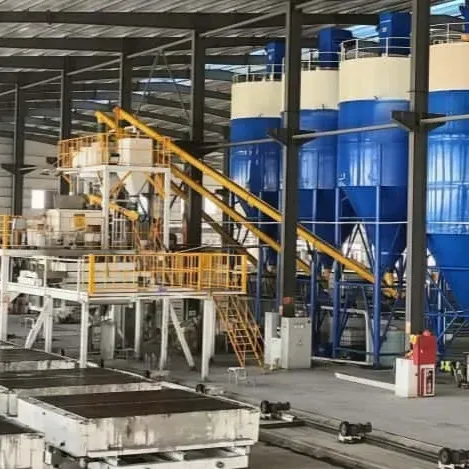
Precast Concrete Plant
Smart Batching Solutions. Maximum Precast Profitability.
Capacity:
25-240m³/h
Type:
Mobile or Stationary
Price:
$10,000 – $200,000
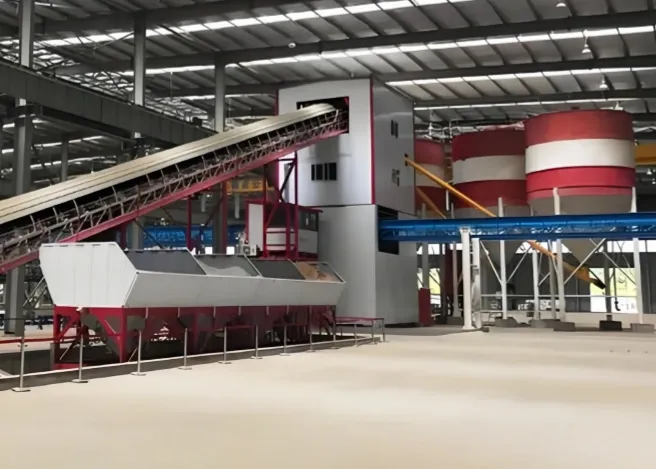
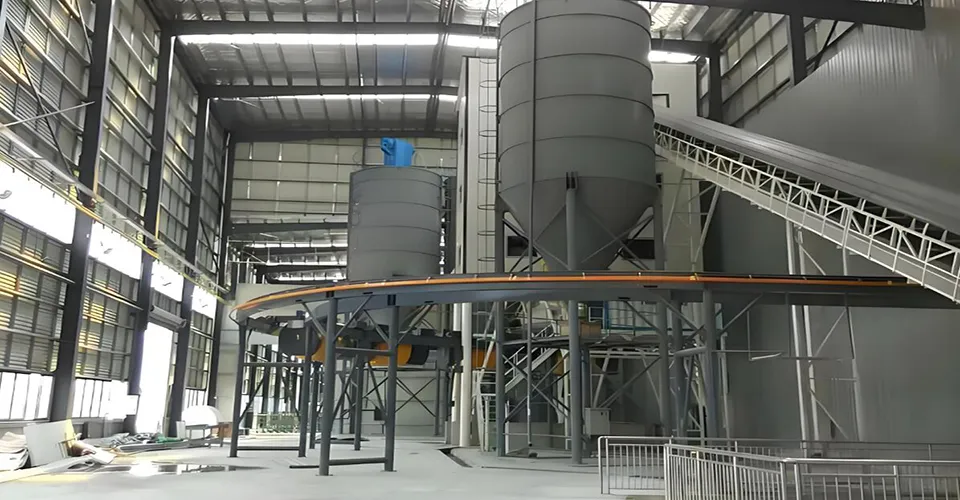
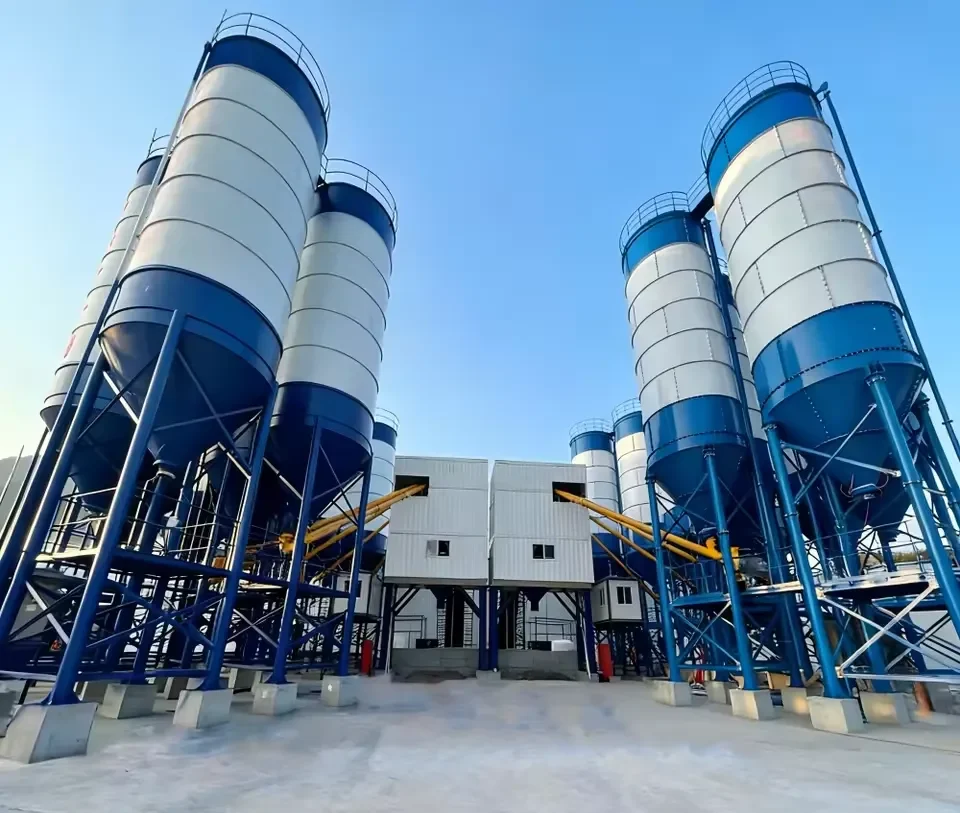
Every precast concrete plant we design is built for reliable, long-term performance, using high-quality materials to serve producers of all sizes—from small niche operations to high-volume facilities. We deliver a complete, one-stop solution — from layout and engineering to final commissioning — using a modular, integrated approach that aligns with strict quality standards.
You choose the configuration that fits your operation:
- Mixers: Planetary mixers from ⅓ to 5 cubic yards, or twin-shaft mixers from ½ to 12 cubic yards.
- Production options: 25-240m³/h, fully customizable to your requirements.
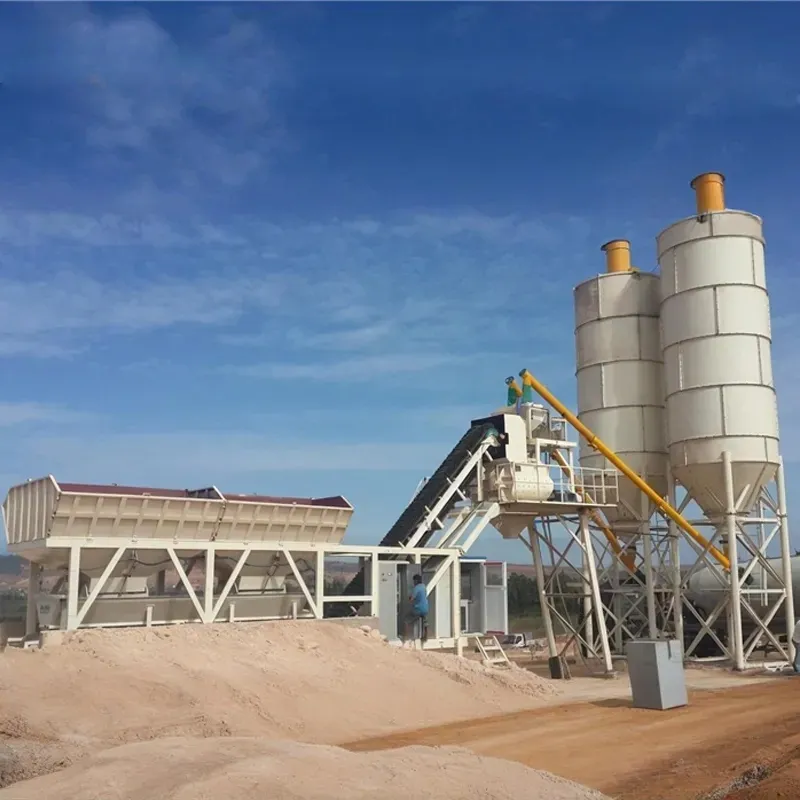
- Mobility: Portable plants for easy relocation, or stationary plants for long-term, fixed-site production.
All systems are designed and manufactured to meet the demands of modern precast production, delivering consistent mix quality, reliable cycle times, and low maintenance. Our engineering team works directly with you to tailor a plant that matches your capacity, space constraints, and growth goals.
Precast Concrete Plants For Sale
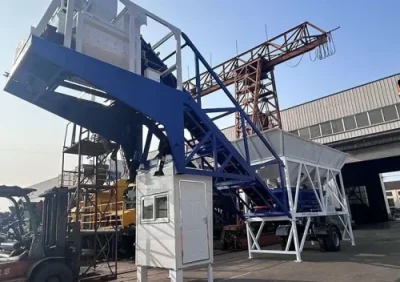
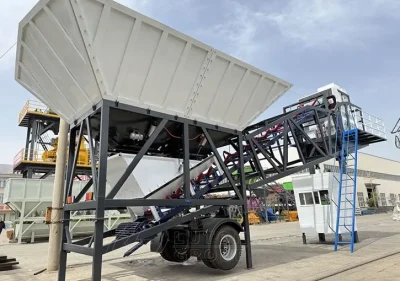
Mobile Precast Concrete Plant
YHZS25 Concrete Plant
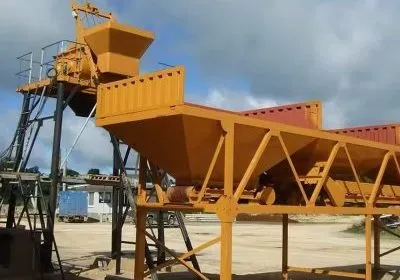
Capacity:
25m³/h
Mixer Capacity:
500L
Mixer Type:
JS500
Matched Batcher:
PLD800
YHZS35 Concrete Plant
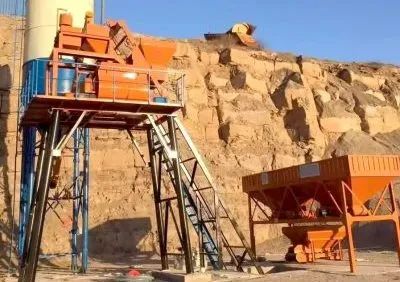
Capacity:
35m³/h
Mixer Capacity:
750L
Mixer Type:
JS750
Matched Batcher:
PLD1200
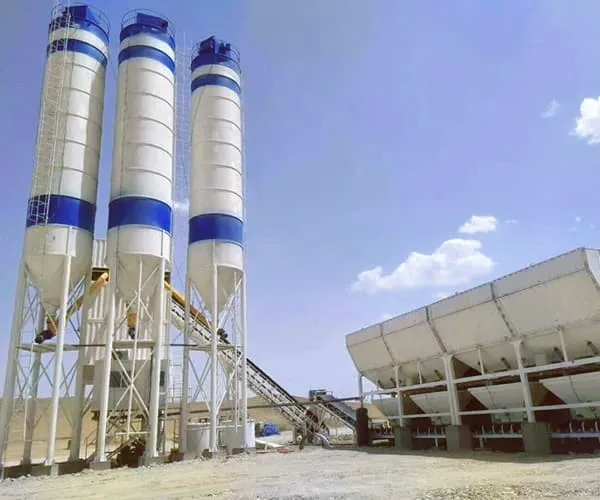
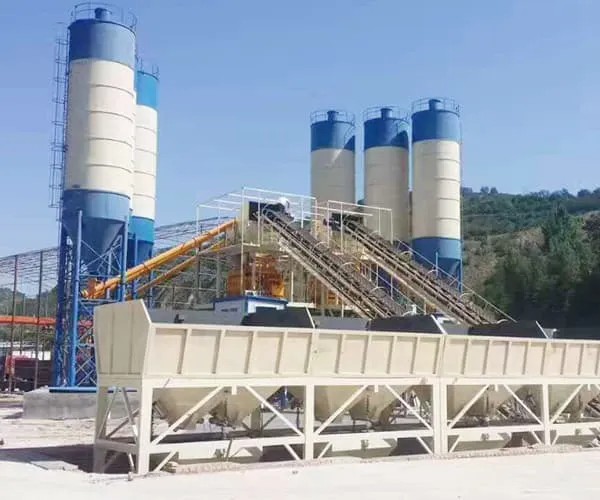
Stationary Precast Concrete Plant
HZS50 Concrete Plant
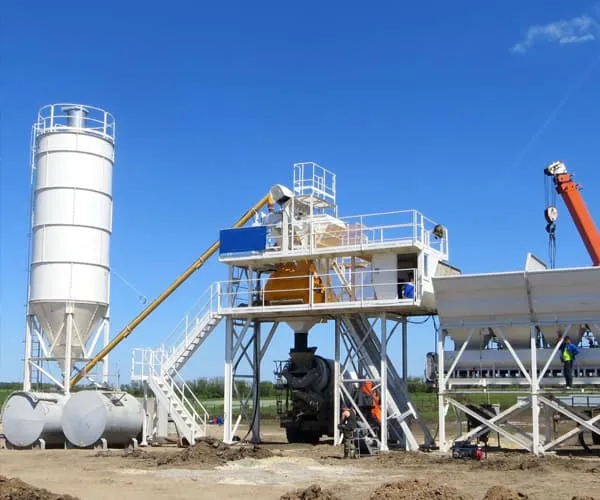
Capacity:
50m³/h
Mixer Capacity:
1000L
Mixer Type:
JS1000
Matched Batcher:
PLD1600
HZS75 Concrete Plant
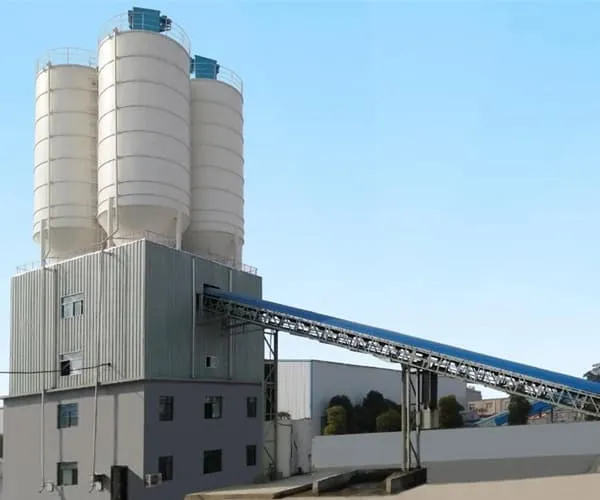
Capacity:
75m³/h
Mixer Capacity:
1500L
Mixer Type:
JS1500
Matched Batcher:
PLD2400
Specifications of Precast Concrete Plant
| Type | YHZS25 | YHZS35/40 | YHZS50/60 | YHZS75/90 |
| Capacity (m³/h) | 25 | 35 | 50 | 75 |
| Concrete Mixer Type | JS500 | JS750 | JS1000 | JS1500 |
| Mixer Discharging Capacity (L) | 500 | 750 | 1000 | 1500 |
| Mixer Aggregate Size (mm) | 80/60 | 80/60 | 80/60 | 80/60 |
| Matched Aggregate Batcher | PLD800 | PLD1200 | PLD1600 | PLD2400 |
| Aggregate Weighing System | 1500kg±2% | 2000kg±2% | 3000kg±2% | 3000kg±2% |
| Water Weighing System | 200kg±1% | 300kg±1% | 600kg±1% | 900kg±1% |
| Cement Weighing System | 300kg±1% | 450kg±1% | 900kg±1% | 1500kg±1% |
| Additive Weighing System | 20kg±1% | 30kg±1% | 30kg±1% | 50kg±1% |
| Fly Ash Weighing System | Optional |
| Type | HZS90 | HZS120 | HZS180 | HZS240 |
| Capacity (m³/h) | 90 | 120 | 180 | 240 |
| Concrete Mixer Type | JS1500 | MAO3000/2000 | MAO4500/3000 | MAO6000/4000 |
| Mixer Power(KW) | 65.5 | 74 | 110 | 150 |
| Mixer Discharging Capacity (L) | 1500 | 2000 | 3000 | 4000 |
| Mixer Aggregate Size (mm) | 80/60 | 80 | 150 | 150 |
| Aggregate Bin Volume(m³) | 2/3/4×12 | 2/3/4×20 | 2/3/4×30 | 2/3/4×40 |
| Belt conveying Capacity(t/h) | 450 | 550 | 650 | 900 |
| Aggregate Weighing System | 3000Kg ±2% | 2200Kg ±2% | 3000Kg ±2% | 4200Kg ±2% |
| Cement Weighing System | 1500Kg ±1% | 1200Kg ±1% | 1800Kg ±1% | 2200Kg ±1% |
| Fly Ash Weighing System | 900Kg ±1% | 400Kg ±1% | 500Kg ±1% | 800Kg ±1% |
| Water Weighing System | 600Kg ±1% | 500Kg ±1% | 800Kg ±1% | 1000Kg ±1% |
| Additive Weighing System | 50Kg ±1% | 50Kg ±1% | 80Kg ±1% | 80Kg ±1% |
Why Invest in Precast Production?
- Market growth: Global precast concrete market projected to expand at 5.7% CAGR through 2030, driven by urbanization and infrastructure demand
- Policy mandate: 150+ countries/regions enforce off-site prefabrication targets to cut construction carbon emissions by 30%+
- Profit margins: Premium precast components (wall panels, hollow-core slabs) deliver 35-55% gross margins—2x higher than traditional ready-mix concrete
- Sustainability impact: Precast construction reduces on-site waste by 70% and shortens project timelines by 20-40% vs cast-in-place methods
- Competitive edge: 80% of global large-scale infrastructure tenders prioritize precast solutions for quality, speed, and eco-compliance
What is the price of a precast concrete plant?
A standard stationary precast concrete plant price typically ranges from $10,000 to $200,000+ USD (Note: This is a baseline reference range; please contact our team for a precise quotation tailored to your site specifications).
The core investment is primarily determined by your target production capacity—ranging from 25m³/h for localized projects to 240m³/h for large-scale central plants. Beyond capacity, the final price is influenced by technical configurations such as aggregate feeding methods (skip hoist vs. belt conveyor), the sophistication of the automated control system, and environmental compliance add-ons.
Whether you are opting for an agile model like the HZS25–HZS50 for flexible operations or a high-capacity HZS100–HZS240 system for continuous commercial supply, we work with you to balance performance with budget requirements.
Wide Range of precast Concrete Plant Solutions
Our precast batching plants deliver high-precision mixes for essential components like pipes, beams, wall panels, and bridge segments. Engineered for maximum versatility, they streamline production for commercial buildings, critical infrastructure, and modular housing, ensuring every batch meets the rigorous structural standards demanded by modern construction.
Precast Components We Produce
Our plants can manufacture a full range of high-quality precast concrete elements, including standard & custom architectural wall panels (thickness 100-300mm), prestressed hollow-core slabs (span 6-12m), heavy-duty beams/columns (load-bearing capacity up to 1000kN), high-pressure drainage pipes (DN300-DN2000), bridge girders, tunnel segments, precast stairs, utility culverts, and modular housing components.
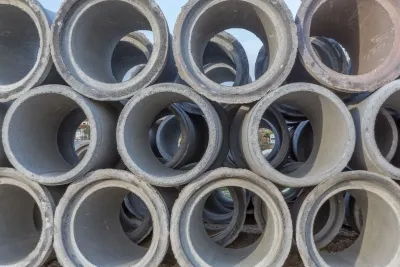
Concrete pipes
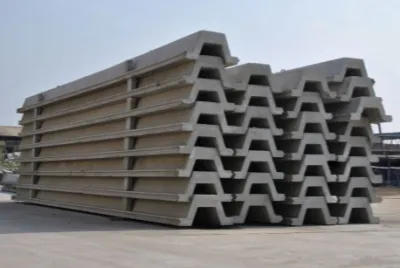
Concrete beams

Concrete bridge segments

Floors, Molds, Modules and More…
Precast production technology for all needs
- Urban Housing: Architectural wall panels and hollow-core slabs for rapid commercial development.
- Mega Infrastructure: Heavy-duty bridge girders and tunnel segments for lucrative government contracts.
- Municipal Works: High-strength drainage pipes and utility culverts.
Benefits of Using Precast Concrete Elements
- Rapid Installation: Eliminates on-site pouring and curing time, reducing overall project construction schedules by 30-40%.
- Superior Strength: Factory-controlled batching and steam curing yield dense, high-compressive-strength concrete (often ≥50 MPa) with an extended lifespan.
- Labor Reduction: Ready-to-install components drastically cut the need for complex on-site formwork, scaffolding, and manual labor by over 50%.
- High Precision: Manufactured in exact steel molds with dimensional tolerances of ≤ ±2 mm, providing perfectly smooth architectural finishes that eliminate the need for heavy on-site plastering.
- All-Weather Construction: Off-site factory production ensures continuous component output and zero project delays, regardless of extreme rain, snow, or heat.
- Sustainable & Green: Centralized batching drops material waste to below 5%, minimizes on-site dust/noise pollution, and strongly supports LEED green building certifications.
- Fire & Acoustic Performance: High-density reinforced concrete inherently provides excellent sound insulation (up to 50 STC) and maximum structural fire resistance ratings (2-4 hours).
Explore Our Precast Concrete Plant Projects
Discover how our precast concrete plant translate these core technical advantages into measurable commercial success and maximum ROI for contractors and concrete suppliers worldwide.
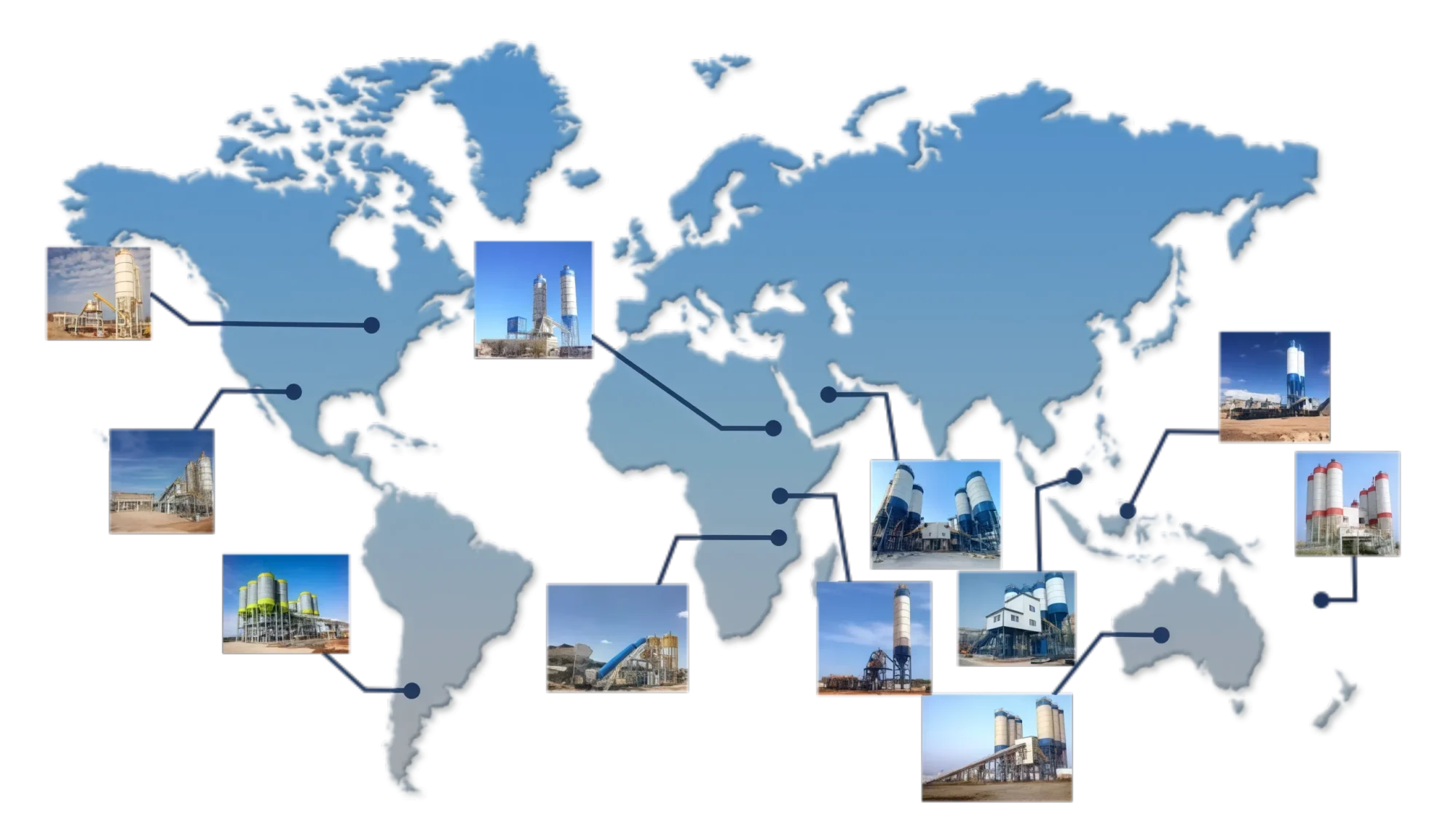
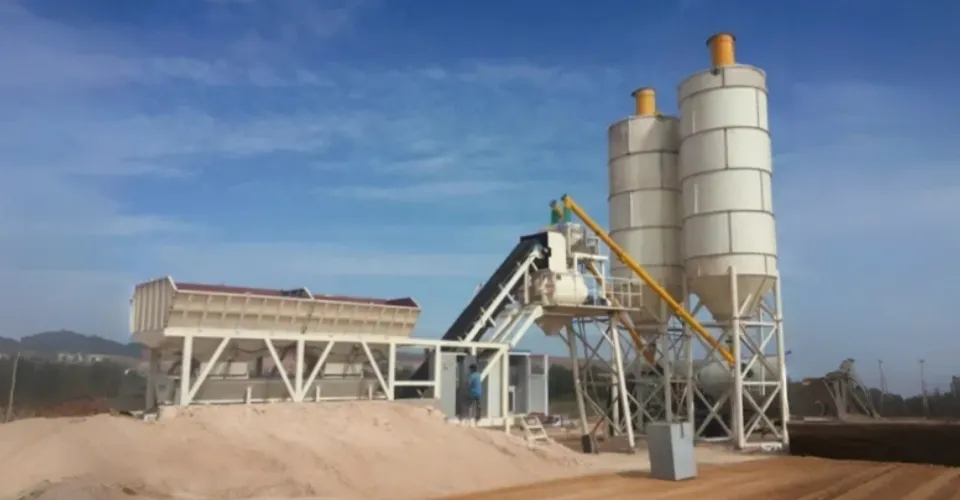
Mastering Dry-Cast Challenges – Specialized Precast Plant for Pipe Production in Indonesia
To optimize the production of large-diameter drainage pipes, a precast factory in Jakarta installed our specialized YHZS60 portable precast concrete batching plant. Engineered specifically for dry-cast concrete, the plant features high-precision moisture sensors and a heavy-duty mixing blades configuration. This allows for the instant stripping of molds with perfect surface finishes, significantly reducing cement consumption while exceeding local durability standards. This superior pipe quality enabled the client to easily win major municipal drainage bids, translating lower raw material costs into highly profitable, large-volume orders.
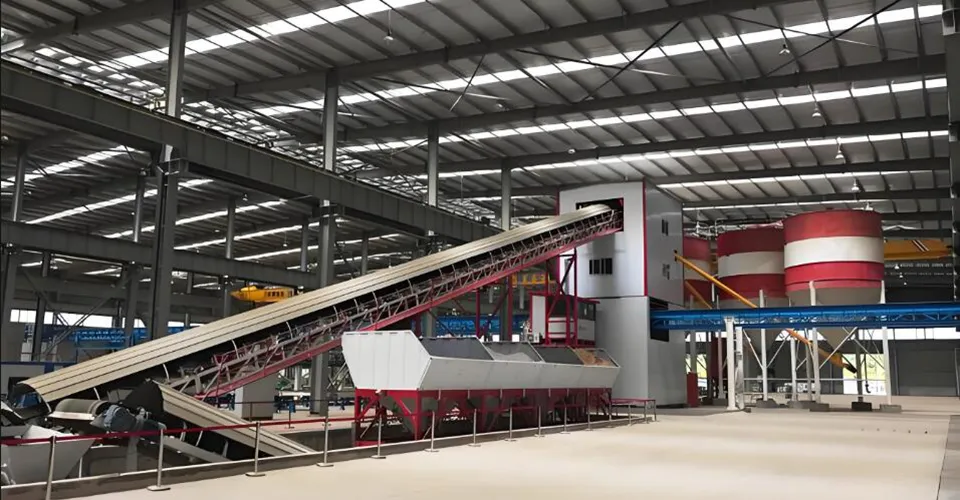
Precision Quality for Housing – HZS90 Planetary Precast Plant in Vietnam
To dominate the high-end PC element market, a leading manufacturer in Ho Chi Minh City integrated our HZS90 precast plant. Equipped with a counter-current planetary mixer, the plant ensures 100% homogeneity for high-strength concrete. This precision setup allowed them to achieve a zero-reject rate on complex architectural panels, securing their position as a preferred supplier for luxury residential projects.
Seamless Automated Production – Customized Precast Batching System in Saudi Arabia
Facing the massive demand of a “Vision 2030” infrastructure project, a major contractor deployed our fully automated precast solution integrated with flying bucket delivery. By synchronizing the batching control with their hollow-core slab production lines, the system eliminated manual material handling and cut cycle times by 15%, maintaining non-stop production in desert temperatures exceeding 45°C. This guaranteed the rapid, high-yield output of premium hollow-core slabs, ensuring the contractor delivered the mega-project ahead of schedule.
Explore Our Precast Concrete Plant Solutions
Precast concrete batching plants produce high-quality concrete in a controlled environment for precast elements, with types varying by precast product, production scale and location requirements.
Stationary Precast Concrete Plant
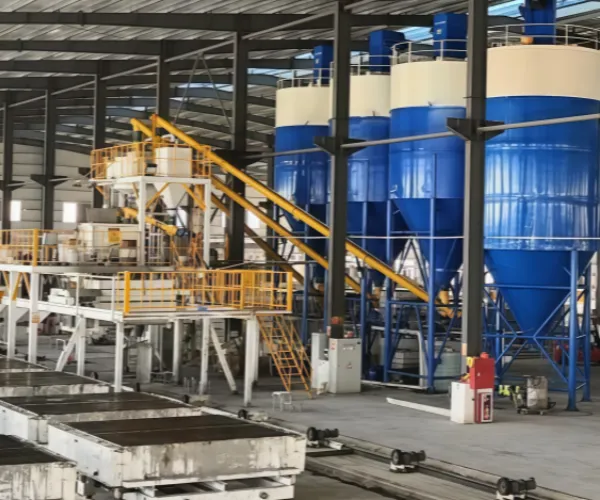
Designed for Long-Term, Heavy-Duty Production
- Ideal For: Large-scale precast manufacturing factories and long-term commercial infrastructure projects.
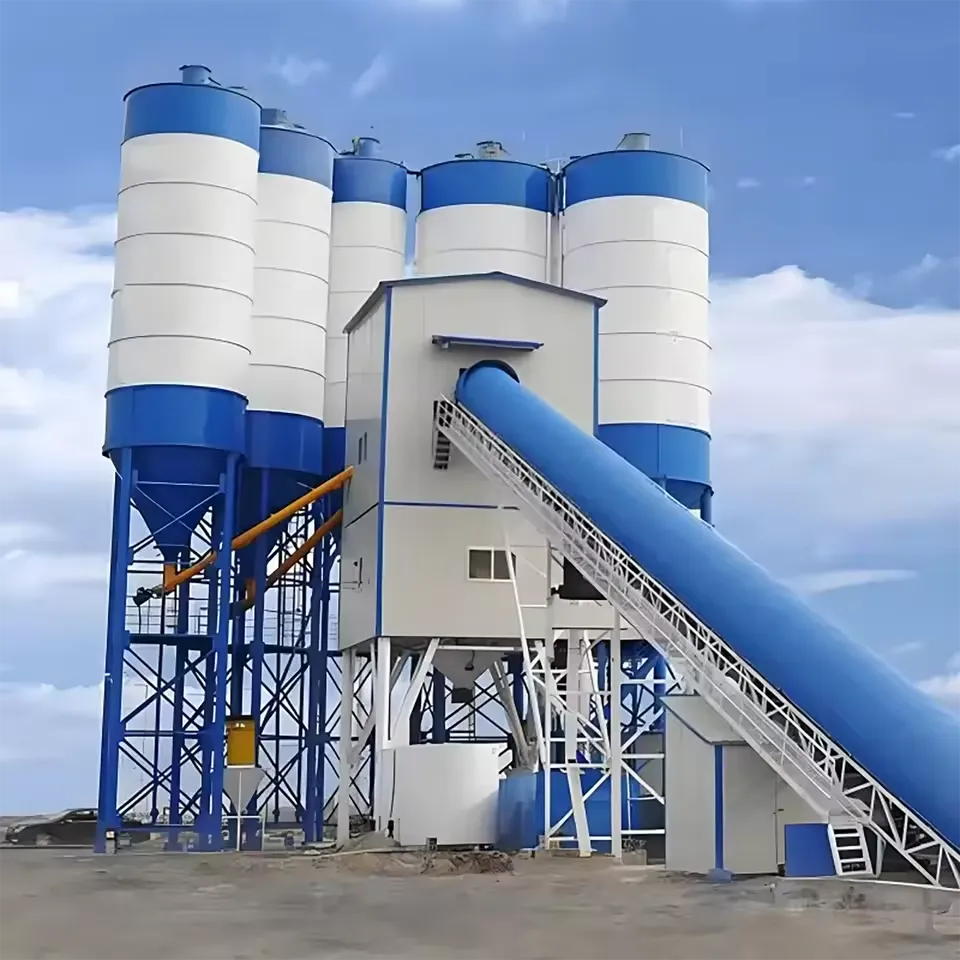
- Hot-Selling Models: Hopper Type (HZS25 / HZS50); Belt Type (HZS90 / HZS120).
- Core Advantages: Delivers massive production capacity with advanced automation. Equipped with multi-line batching systems, it allows operators to seamlessly produce various complex concrete mixes simultaneously.
Portable Precast Concrete Plant
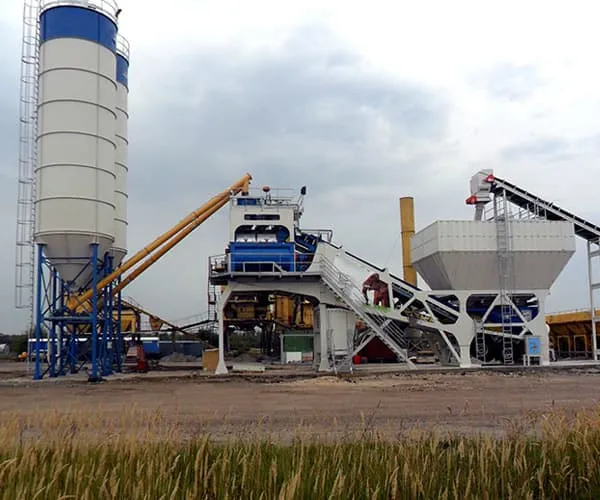
Designed for Temporary Sites & Remote Projects
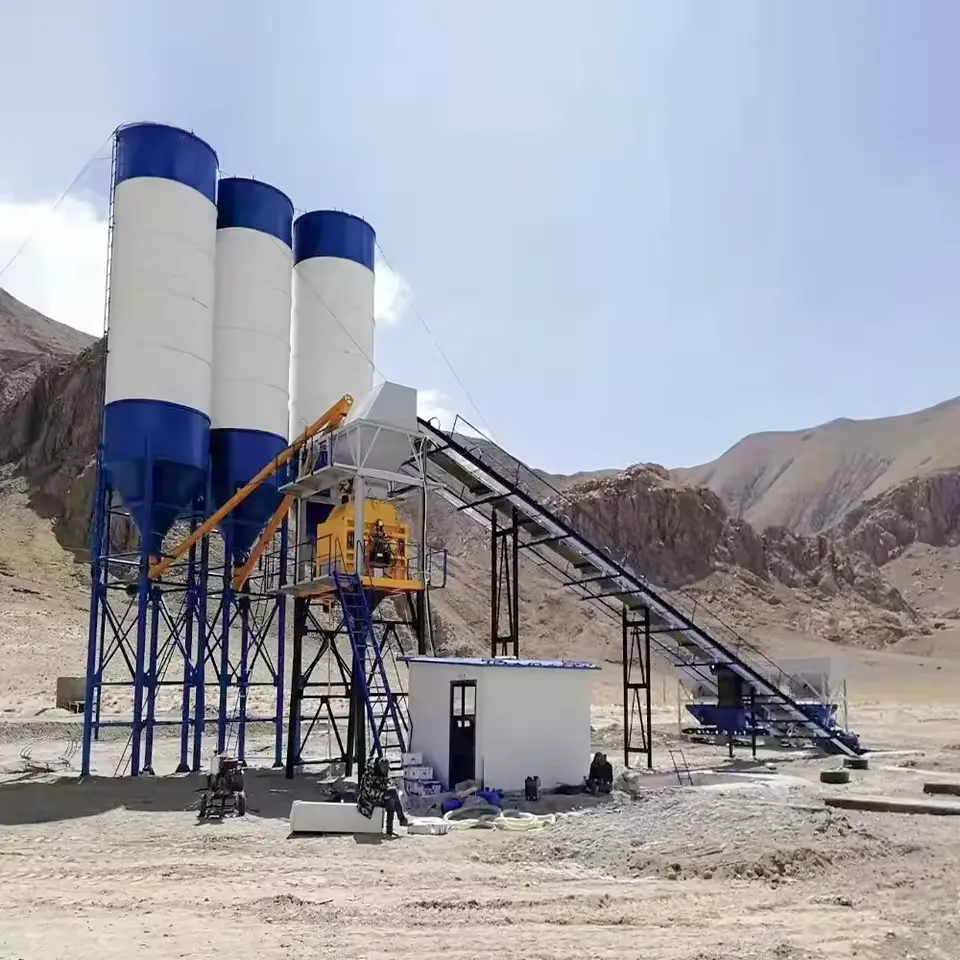
- Ideal For: Remote engineering sites, temporary precast yards, and rapid modular construction projects.
- Hot-Selling Models: YHZS60, YHZS75
- Core Advantages: Features a foundation-free, compact design that guarantees rapid installation and dismantling. Producing precast elements directly on-site drastically slashes your transportation costs and logistics downtime.
Central Mix Precast Concrete Plant
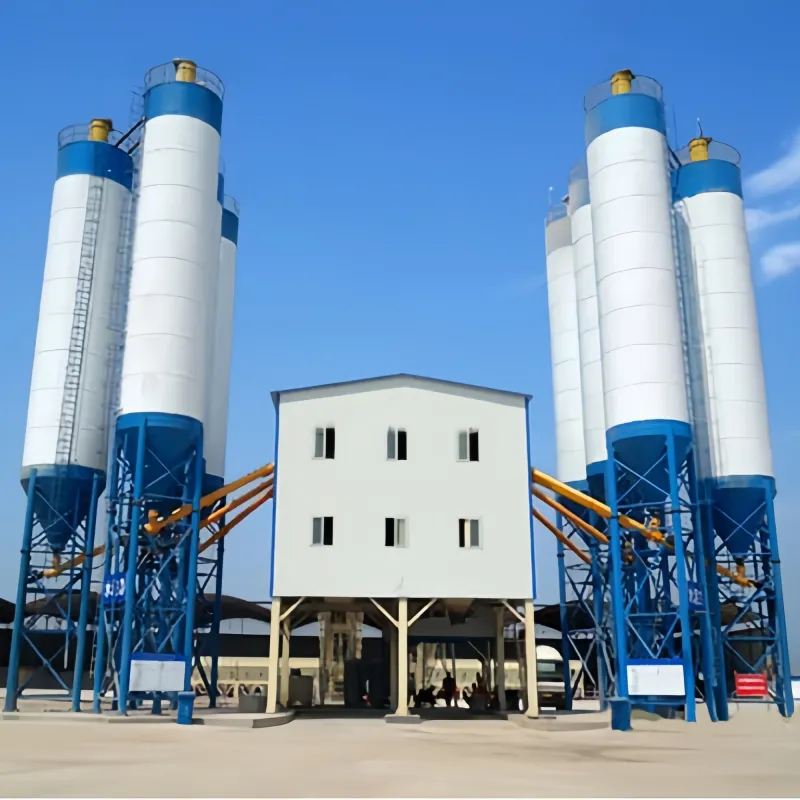
Designed for High-Grade Structural Components
- Ideal Applications: Manufacturing high-strength precast structural elements for highway bridges, high-rise buildings, and heavy load-bearing infrastructure.
- Core Advantages: 100% central mixing ensures superior concrete homogeneity. It is perfectly engineered to handle the strict demands of C50+ high-grade and ultra-high-performance concrete production.
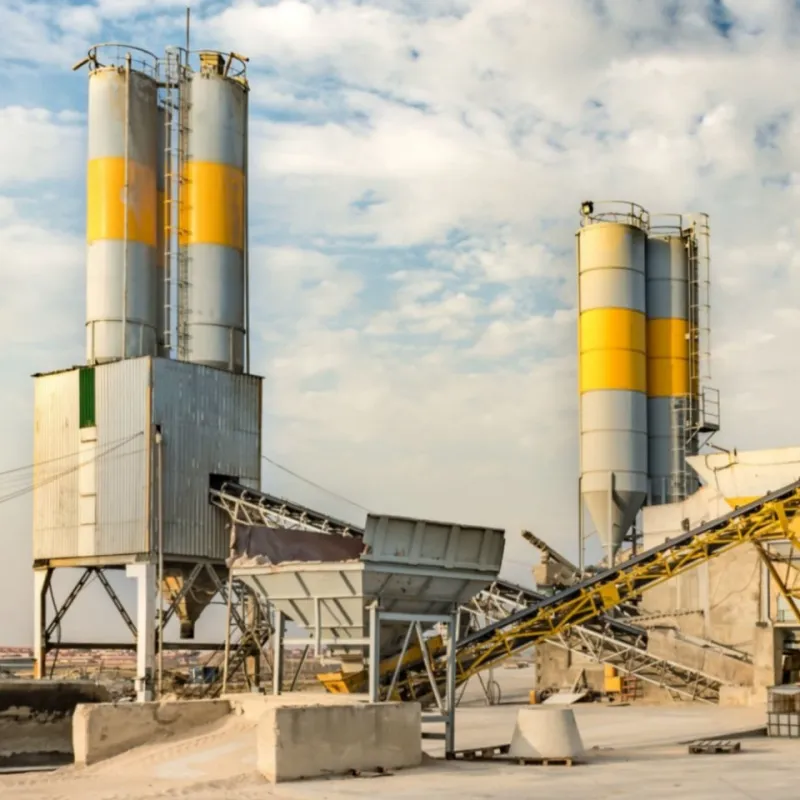
Fully Automated Precast Concrete Plant
Designed for Large-Scale, Standardized Manufacturing
- Ideal Applications: Mega precast concrete bases that demand the ultimate balance of peak efficiency and environmental sustainability.
- Core Advantages: Features end-to-end digital control, highly stable output rates, and integrated waste recycling systems. It is the ultimate solution for the highly profitable mass production of standardized precast components.
Precast vs. Ready Mix Concrete Plant
While both facilities are engineered to produce high-quality concrete, their mixing architectures and discharge logistics are distinctly optimized for entirely different production models.
| Precast Concrete Plant | Ready Mix Concrete Plant | |
| Primary Application | Manufacturing factory-controlled precast elements (hollow-core slabs, wall panels, pipes, sleepers). | Commercial bulk concrete sales for external construction sites and general infrastructure. |
| Mixer Configuration | High-intensity Planetary Mixers or specialized heavy-duty Twin-Shaft Mixers. | Standard Twin-Shaft Mixers designed for rapid, high-volume agitation. |
| Concrete Slump Type | Dry-cast, zero-slump, Self-Compacting Concrete (SCC), and Ultra-High Performance Concrete (UHPC). | Wet, highly fluid, and standard-slump ready-mix concrete. |
| Discharge Logistics | Integrated into factory systems: discharges into flying buckets, shuttle carts, or directly to extrusion machines. | High-clearance discharge (typically 3.8m–4.1m) directly into transit mixer trucks. |
| Dosing & Moisture Control | Micro-tolerance precision: Utilizes dynamic microwave moisture sensors to strictly control the exact Water/Cement (W/C) ratio. | Standard precision: Focuses on maintaining bulk formulation ratios for large volumetric output. |
| Production Focus | Extreme batch-to-batch consistency, strict dimensional tolerances, and surface finish quality. | High hourly volumetric output (m³/h) and continuous truck loading efficiency. |
- Choose a Precast Concrete Plant if: You are setting up an enclosed factory to manufacture standardized structural components (like PC walls, bridge girders, or precast pipes). This system is mandatory if your end-products require zero-slump concrete, automated distribution to molds, rapid demolding cycles, and strict CE/NPCA compliance.
- Choose a Ready Mix Concrete Plant if: Your primary business model is producing and selling bulk liquid concrete to various commercial construction sites. This is your go-to solution if you need maximum hourly output (e.g., 120m³/h to 240m³/h), fast transit truck loading, and the flexibility to handle multiple standard mix designs per day.
Core Components of a Precast Concrete Plant
A high-performance precast plant operates as a seamlessly integrated system, where every component is engineered to deliver the exact precision and homogeneity required for industrial-scale manufacturing.
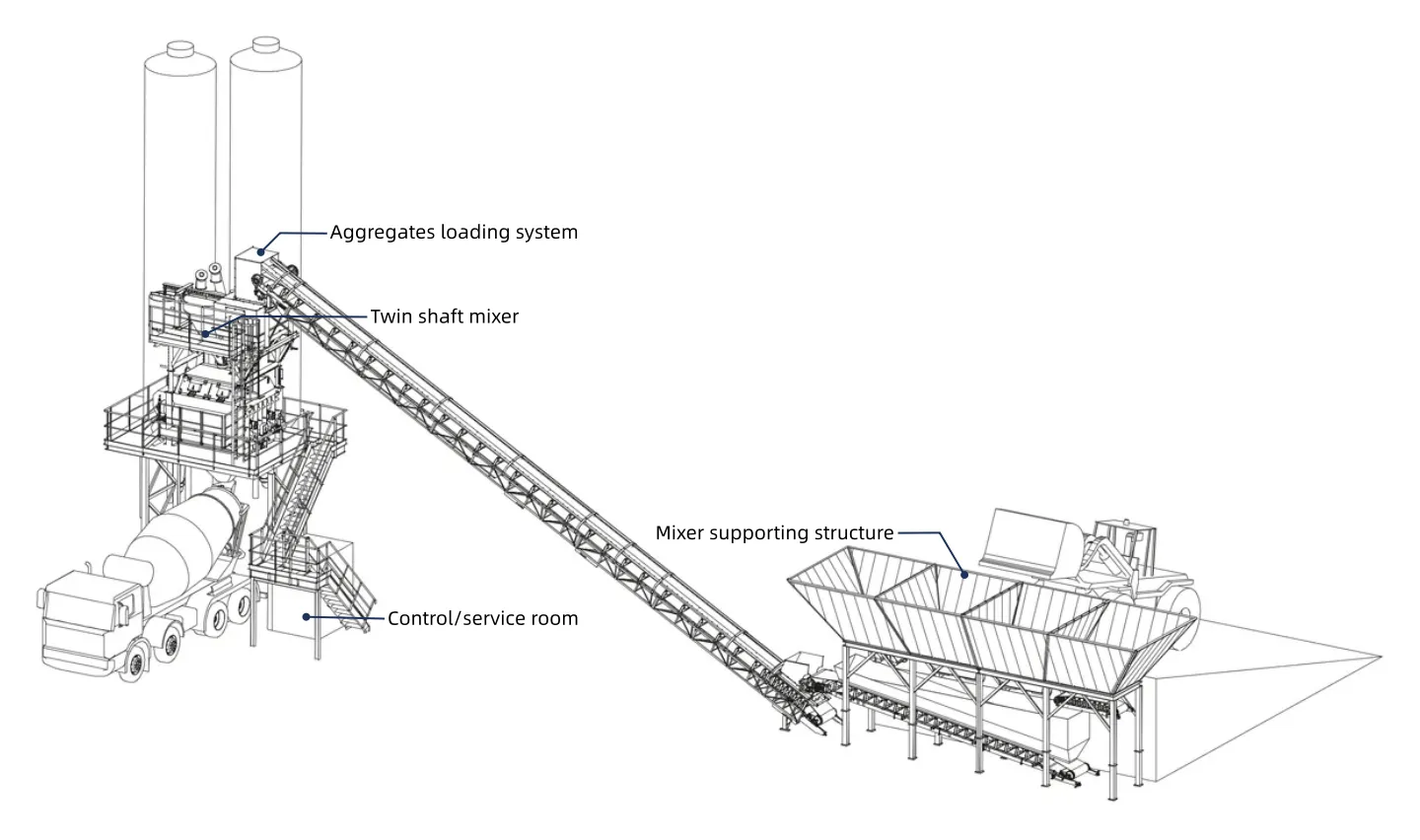
- The Mixing System: For most architectural precast and dry-cast applications (like pipes or blocks), Planetary Mixers are highly recommended for complex, dry-cast, or colored architectural elements to guarantee 100% homogeneity without dead angles. For large-scale, high-volume structural elements using wet-cast concrete, a heavy-duty twin-shaft mixer often provides the best balance of output and efficiency.
- Aggregate Batching System: Features multi-bin configurations equipped with independent pneumatic discharge gates. It ensures the highly accurate proportioning of various sand and gravel sizes, which is critical for the structural integrity of precast elements.
- Precision Weighing System: Utilizes highly sensitive load cells to independently weigh cement, water, and liquid admixtures. This strictly controls the water-cement ratio within a ≤±1% error margin, effectively eliminating slump fluctuations.
- Material Conveying & Concrete Delivery: Aggregates are rapidly transferred to the mixer via space-saving skip hoists or high-efficiency enclosed belt conveyors. Specifically for precast factories, the mixed concrete is efficiently distributed to molding lines via automated flying buckets.
- Intelligent Control System: Powered by an advanced PLC and an intuitive industrial PC interface. It empowers your operators to easily manage complex mix recipes, monitor the entire production cycle in real-time, and generate automatic batch reports for strict quality tracking.
What Type of Mixer is the Best for a Precast Concrete Plant?
The “best” mixer for a precast concrete plant strictly depends on your specific end-product and slump requirements. While both twin-shaft and planetary mixers are widely used in the precast industry, planetary mixers are generally considered the superior choice for high-end, complex structural elements, whereas twin-shaft mixers are favored for high-volume, heavy-duty component production.
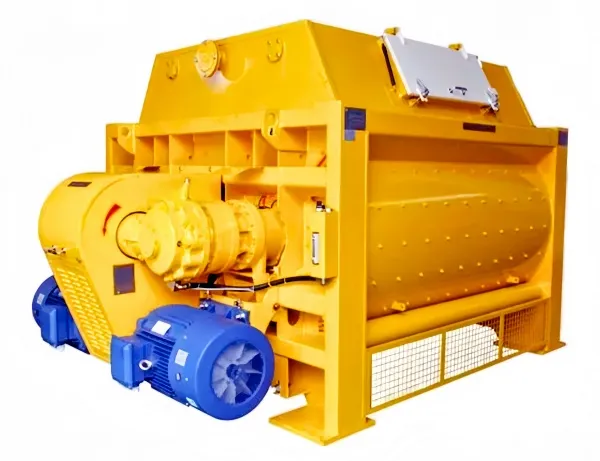
Twin-shaft concrete mixer
Twin-shaft concrete mixers feature dual horizontal synchronized shafts that create an intense, boiling mixing action. Their primary advantage lies in their exceptional processing speed, high hourly output, and ability to handle larger aggregate sizes with minimal wear. They are highly efficient for continuous bulk batching. Consequently, these mixers are heavily deployed in precast plants manufacturing large-volume products such as concrete pipes, railway sleepers, precast concrete piles, and heavy prefabricated bridge girders.
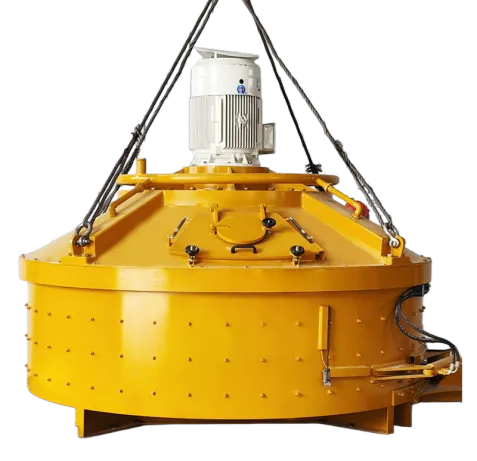
Planetary concrete mixer
Planetary concrete mixers utilize a complex vertical-axis geometry where mixing stars revolve around the pan’s center while spinning on their own axes, ensuring 100% material coverage with zero dead zones. This intensive shearing action is unmatched for processing high-viscosity, zero-slump, Self-Compacting Concrete (SCC), and colored mixes. Because they guarantee absolute homogeneity and flawless surface finishes, planetary mixers are the gold standard for specialized precast factories producing hollow-core slabs, architectural wall panels, block paving, and high-precision PC components.
The technology of our Precast Concrete Plant
Our precast concrete plants integrate intelligent automation, precision dosing, and data-driven controls to meet global infrastructure’s exacting standards, ensuring zero-defect production.
- High-Precision Weighing System: Multi-point suspension load cells and digital signal processing deliver ≤±1% dynamic accuracy. Dual-stage pneumatic feeding and auto-compensation algorithms eliminate material free-fall errors, guaranteeing precise mix formulas for UHPC and SCC applications.
- Weather-Proof Production Environment: Active thermal-regulated design with microwave moisture sensors automatically adjusts the water-cement ratio in real time. Paired with steam-heated aggregate grids and chilled water injection, it controls discharge temperature to ensure optimal concrete hydration and curing in extreme climates.
- Advanced PLC & SCADA Control Architecture: Industrial-grade PLC and dual-computer synchronous control enable microsecond-level actuator response via high-speed protocols. The 3D SCADA interface offers full process visualization, while open-API architecture integrates seamlessly with ERP/MES systems for automated scheduling, predictive maintenance, and remote diagnostics.
- Data-Driven Quality Assurance & Traceability: Real-time motor current analysis in the planetary mixer monitors concrete homogeneity and viscosity. Each batch generates a digital ticket logging 50+ technical data points, ensuring full traceability for CE, ISO, and NPCA audits.
- Active Environmental Control Systems: Reverse-pulse jet baghouse filters capture >99.9% of sub-micron dust, while closed-loop slurry recycling and acoustic encapsulation enable zero-discharge operation, meeting the strictest global environmental compliance standards.
Precast Concrete Plant Cost
Precast Concrete Plant Cost: Maximizing Your Long-term ROI
Your long-term profitability relies on optimizing labor, production, and maintenance costs. Modern automated precast plants cut labor expenses by roughly 60% vs. manual setups, while our high-performance twin-shaft mixers shorten mixing cycles by 15%–20% to lower unit production costs. Premium wear-resistant components keep annual maintenance within 3%–5% of total equipment investment, minimizing unplanned downtime risks. Beyond operational savings, this continuous reliability ensures you consistently output premium, defect-free precast components that command higher market prices. Most of our clients achieve full ROI within a remarkably short payback period of 1.5 to 3 years.
Setup Cost: Streamlining Logistics and Commissioning
Project planning must cover civil works, installation, and compliance. Compact small-scale plants require civil foundations equal to 10%–15% of equipment cost, while larger HZS120–HZS240 models need 20%–30%. Our modular pre-assembled design reduces on-site installation time by 40%, with total commissioning costs held at 5%–8% of equipment value. International certifications (CE/ISO) and local environmental filings typically cost $2,000–$5,000 USD, varying by regional regulations.
Strategic Precast Concrete Plant Layout
Designing a highly efficient precast concrete plant layout requires a strict sequential arrangement. Because heavy-duty precast machinery becomes a permanent fixture once installed, the production flow must follow a logical, irreversible progression: raw material storage ➔ concrete batching ➔ molding and extrusion ➔ curing ➔ finished element dispatch.
In a precast batch plant, the most critical production bottleneck often lies in the mold setting process. Traditional precast concrete plant layouts rely heavily on manual operator experience, leading to sub-optimal pallet utilization, wasted curing space, and inflated energy costs. A highly profitable facility requires a data-driven layout strategy that mathematically maximizes the capacity of every steel pallet.
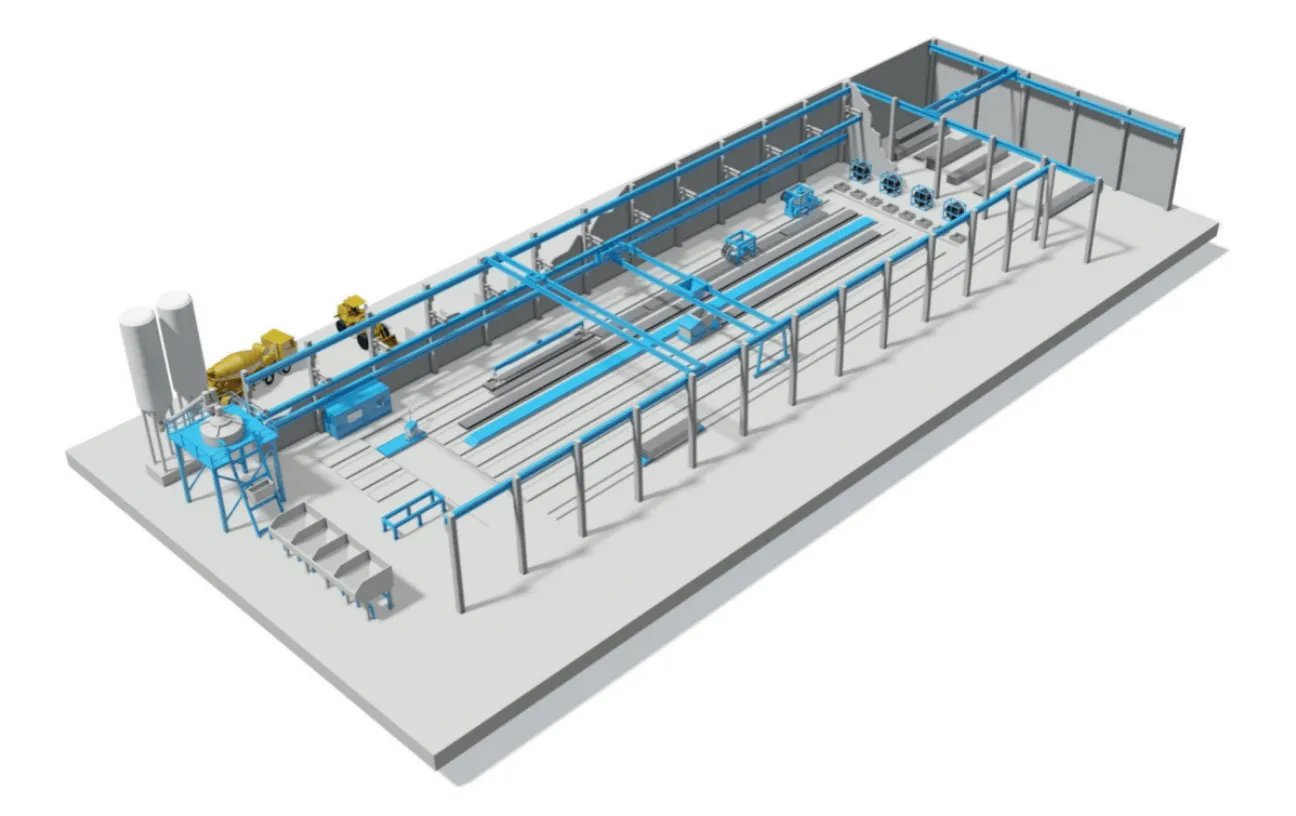
Practical Operational Plan for Maximum Efficiency:
Component Sequencing Strategy: Never arrange molds randomly. Categorize your daily production orders into “large” (e.g., structural outer wall panels) and “small” (e.g., floor slabs, precast beams) groups. Always position the largest elements on the pallet first, utilizing the smaller components to strategically fill the remaining geometric gaps.
Precise Orientation Optimization: Implement a strict coordinate-based layout system. By scientifically calculating the optimal horizontal and vertical placement of each mold, you eliminate spatial overlaps and can push average pallet utilization rates above 90%.
Curing Kiln Synchronization: Curing kilns consume massive amounts of industrial electricity and water per hour. By maximizing the number of elements per pallet, you directly minimize the total pallet cycles required for the curing phase.
Implementing this systematic, calculated layout approach can reduce your required pallet cycles by over 20%, significantly lowering energy consumption, shortening manufacturing lead times, and maximizing your overall plant ROI.
Setup Cost: Streamlining Logistics and Commissioning
Transitioning from equipment installation to commercial-scale production requires rigorous quality assurance. To minimize trial-and-error costs and ensure immediate compliance with CE and ISO standards, implementing a comprehensive precast concrete plant inspection checklist is mandatory before final handover. Your engineering and quality control teams should validate the following critical parameters:
Site Infrastructure: Guarantee continuous, stable feeds for industrial electricity, water, and compressed air lines.
Equipment Calibration: Verify the precise alignment of production lines, weighing scale accuracy, and planetary mixer efficiency.
Process & Quality Validation: Assess the dimensional accuracy, surface finish, and curing consistency of the concrete elements during initial pilot trial runs.
Pairing a highly efficient factory layout with a strict inspection protocol ensures your facility operates profitably from day one.
How Does a Precast Concrete Plant Work?
The operation of a precast concrete batch plant is a highly synchronized, closed-loop process. Guided by an intelligent PLC control system, it ensures that every batch meets the exact water-cement ratio and structural strength required for precast elements.
Step 1: Precision Proportioning & Weighing
The process begins in the aggregate batchers, where different sizes of sand and gravel are accurately weighed via pneumatic discharge gates. Simultaneously, cement and fly ash are transferred from the silos via screw conveyors to their dedicated weigh hoppers, while water and chemical admixtures are pumped into independent precision scales.
Step 2: Automated Material Conveying
Once precisely measured, the aggregates are hoisted into the mixer using a space-saving skip hoist or a high-capacity enclosed belt conveyor. At the exact programmed moment, the cement, water, and additives are discharged into the mixing drum to begin the blending cycle.
Step 3: High-Homogeneity Mixing
This is the core of precast production. Depending on the design (often utilizing a counter-current planetary mixer or a heavy-duty twin-shaft mixer), the materials are intensely agitated. High-precision moisture sensors continuously monitor the mix to guarantee 100% homogeneity, which is especially critical for low-slump, dry-cast concrete used in pipes and hollow-core slabs.
Step 4: Rapid Discharge & Mold Distribution
Unlike ready-mix plants that discharge into transit mixers, a precast plant discharges the freshly mixed concrete directly into an automated distribution system—typically a flying bucket or a concrete distributor. This system swiftly transports the concrete along overhead rails and precisely pours it into the waiting precast molds, ensuring continuous, zero-delay factory production. This rapid, segregation-free transfer is crucial, as it guarantees a flawless surface finish and uniform structural strength, ensuring your final precast elements meet premium market standards with zero rework.
Advantages of Our Precast Concrete Plant
Investing in our high-performance precast concrete batching plant equipment gives your business a definitive competitive edge. We deliver solutions designed to directly impact your bottom line:
- Accelerate Construction Timelines: By seamlessly synchronizing off-site prefabrication with on-site assembly, our systems help slash overall project schedules by more than 30%.
- Lower Comprehensive Costs: We design a tailored precast concrete plant layout to streamline your yard’s workflow, minimizing on-site labor and formwork usage while dropping material waste to below 5%.
- Guarantee Component Quality: Standardized, highly consistent batching ensures the rigorous strength and durability of every element, drastically reducing expensive project rework.
- Maximize Design Flexibility: Our flexible setups easily adapt to custom molds, empowering you to reliably produce complex, non-standard, and high-grade precast components for any architectural demand.
- NPCA Certified Plants: Equipped with high-precision load cells, advanced planetary mixers, and automated moisture tracking, our batching systems guarantee the absolute batch-to-batch consistency demanded by theNPCA .
Powered by advanced concrete plant precast technology, our fully enclosed systems guarantee weather-proof, continuous production. The intelligent precast concrete plant control system features one-touch PLC operation and high-precision weighing (≤±1% error) to meet the strictest mix formulas. Backed by ISO/CE-certified quality tracking and integrated dust and wastewater recycling, we ensure your operations remain highly accurate, labor-efficient, and fully compliant with global environmental regulations.
Why choose us?
For over twenty years, we have focused on building high-performance concrete plants through smart engineering and dedicated support. We provide complete construction solutions that help our clients tackle their most difficult projects successfully.
Global Leadership & Proven Expertise
With over 20 years of expertise, we are a leading manufacture of high-performance concrete plants, ranking in the global Top 10 for eight consecutive years. We have delivered 3,800+ units across 110 countries, holding a dominant 18-22% market share in key regions. Unlike standard suppliers, we provide complete construction solutions tailored to help you tackle the most complex precast projects.
Innovation & Factory Precision
We invest 4% of our annual revenue into R&D to ensure our equipment handles local voltages, extreme climates, and strict compliance standards. Quality is built-in at our intelligent factory through robotic welding and CNC machining. To guarantee reliability, every unit undergoes a 100% full-load trial run before dispatch, keeping our post-sales failure rate at just 1/3 of the industry average.
Customized Solutions & Global Support
We reject “one-size-fits-all” and instead offer a “One Project, One Plan” strategy—specializing in everything from zero-emission urban plants to specialized mining setups. Trusted by 21 of the Global Top 50 contractors, we back our equipment with 16 overseas subsidiaries and 120+ local dealers, ensuring rapid response times and lifecycle technical support wherever your project is located.
Full-Lifecycle Service: Engineering Your Success from Planning to Production
A precast concrete plant is a major asset. We provide end-to-end support to ensure peak production stability and rapid cost recovery.

Pre-Sales: Strategic Consulting & Site Planning
We provide tailored technical roadmaps rather than simple quotes. By analyzing your materials and timeline, we recommend the ideal plant configuration. To optimize limited site space and traffic flow, our engineers provide detailed Site Planning Drawings and Foundation Layouts. Furthermore, our comprehensive ROI Analysis projects costs and profitability, ensuring confidence in your investment.

In-Sales: Professional Installation & Team Empowerment
We ensure rapid deployment through remote or on-site Installation Guidance following strict mechanical standards. After assembly, rigorous System Commissioning fine-tunes weighing and mixing accuracy to guarantee concrete quality. Concurrently, we deliver comprehensive Operator Training on operation, safety, and troubleshooting, empowering your staff to manage the plant independently.

After-Sales: Operational Security & 24/7 Support
We safeguard your productivity against downtime. Our 24/7 Technical Support ensures experts are always available to resolve issues and minimize disruptions. We provide proactive Maintenance Schemes to extend equipment lifespan, backed by a rapid supply chain for essential wear parts, keeping your plant running at full capacity.
Global Logistics & Delivery Standards
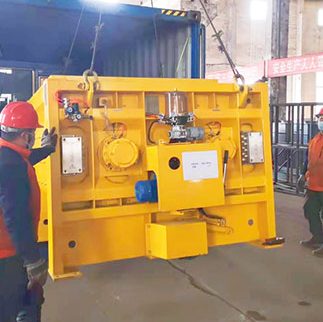
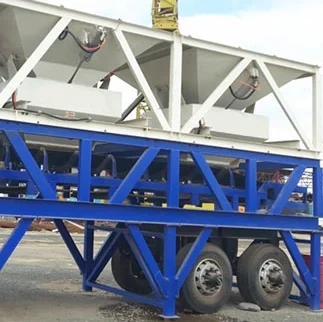
Engineered for export, our concrete batch plant utilize a modular containerized design that significantly reduces sea freight costs and simplifies the unloading process at your site.
Order
Production
Shipment
Discover More Products
Your project has unique demands. Our solutions are engineered to meet them.
Provide our senior engineering team with your project details—such as required output capacity, site conditions, and specific configuration needs. We will promptly deliver a comprehensive proposal, complete with a tailored equipment list and a transparent quote designed to maximize your return on investment.
Let’s build your success together.